Kele Blog

Lights Out?

As many of you may be aware there was a very highly important football contest televised this past Sunday.  I will not name the contest because I do not wish to draw the attention of the sanctioning body or it’s league offices.  During this unnamed football contest there was a strange occurrence, an anomaly, a freaky thing: the power went out.  There were no lights on one side of the stadium.  It brought the game to a halt and many, myself included, stayed tuned to the broadcast.  I read the following day that (however they estimate these things) not a single viewer was lost.  Hmm….

After thinking about it for a while my guess is that many like me stayed glued to the broadcast because in America today power outages are a bit of a novelty.  The power was restored 34 minutes after it went out and the game went on.  It was a good one too.  But I still had to wonder about the power outage and what happened.  I’m sure that everything was checked and double checked – but it still happened.  Chances are that if you are reading this you have most likely seen something like in your professional career.  Have you been part of a project that was checked, double checked, and something still went wrong?  Please share: either reply here or send to david.roames@kele.com  I might even pick a winner or two and send out some prizes. 


Energy Efficiency meet Investors. Investors meet Energy Efficiency

One of the major customer groups Kele serves is the contracting arms of ESCOs (Energy Service Companies).  We work with the great folks on the front lines in this industry everyday and we grow when they grow.  We believe in the work they are doing (making buildings safer, healthier and more energy efficient for occupants and owners) and want to see them succeed.  That being said, I’m always very interested in news I believe will be good for their industry and, in turn, good for Kele.  I just came across an article today on Green Tech Media’s website (www.greentechmedia.com) that might prove to be great news.

One of the key issues ESCOs run up against when selling major commercial energy efficiency retrofits is financing.  They know that energy savings are there and are even willing to put their necks on the line through PBCs (Performance Based Contracts) that guarantee the client a certain level of savings or they don’t get paid.  However, PBCs can limit the scope of a retrofit project as they tend to focus on the “lowest hanging fruit” with regard to energy savings.  These initial steps, while important, are typically smaller in scale and offer the most immediate payback while “deeper” retrofit items with larger but longer period paybacks can get tabled and tabled usually means filed away never to be seen again.  Financing these “deep” retrofits can prove to be a conundrum.

Unlocking the riddle of how to standardize and accurately model the energy savings and securitize the resulting cash flow from lower utility bills has long been the quest of many proponents in our industry.  In other words, how do we convince bankers that these energy savings are real and can produce stable profit streams (i.e., interest) from loans they provide to clients who want to renovate their buildings to save energy? The Environmental Defense Fund (EDF) has been tackling this issue head on for the last two years and may be on the path to “cracking that nut” with its Investor Confidence Project (ICP).

With its set of standard protocols for large, medium and multi-family sites, the ICP hopes to provide “the base minimum requirements for an investment quality analysis on how to maintain and validate lower energy use.” This is what the investors have long needed to feel safe in loaning their money to clients for a retrofit project and by providing this method of securitizaiton, ESCOs may find themselves with a lot more retrofit work on their hands.  At which point, Kele will be ready and waiting to service those customers and “make it easy” to get the job done.  Here’s to hoping we finally solve the energy efficiency financing issue and unlock the huge amount of savings that lies untapped in most commercial buildings out there.

For more information on this topic, here’s a link to the article I referenced above: Can EDF Bring Energy Efficiency to the Investor Market?

What is next, endicator?

In my last blog entry I raved about the endicator power monitor and how it will make my life easier and that is all true.  What the designers have done, unbeknownst to them, is they have made life easier for future DR too.  I’ll try to explain.

Chances are if you are reading this you are either a building automation professional or my Mom (love you Pumpkin) so I can be a little snarky with this part.  There is a commercial for a home security company that shows a home being blanketed in a warm blue blanket of 0s and 1s.  What could be more comforting than knowing your worldly possessions are protected by technology that is older than my father (no offense Pop)?  Don’t get me wrong, digital switches are a very effective and highly efficient way of detecting abnormalities and initiating alarms, but it is hardly innovative.

Innovation is used to advertise almost anything that exists.  I don’t know much about marketing but I’m sure that the wheel V2.0 was depicted on a cave drawing as being so advanced that if you were still using wheel V1.9 or less you were behind the times.  To get the benefits of wheel V2.0 you had to upgrade.  The axle was not available as an upgrade for older versions of the wheel.

This is where the endicator power meter shines and what makes it, in my humble opinion, the most exciting product Kele has ever introduced.  The endicator is ready for the next big thing you need to do with a power monitor.  The endicator can be ordered with or without communications cards.  Units can come from the factory with communication cards for BACnet, LON, Modbus, and N2 OR they can be added/changed in the field. Firmware updates can also be done in the field.   This means that as your customer’s needs change you can upgrade them – and it doesn’t stop there.  I don’t know what the next big thing will be.  It might be adding internet capability or (gasp) cellular.  Being able to upgrade in the future is truly innovative.

I guess to sum it up; the endicator design team has given me a gift with this product.  There is not much in life that is easier than being able to say “yes” to a customer and I’ll be able to say that a lot with the endicator.  This is where you come in.  Where do you see power monitoring going?  I’d like to know.

Managing Shipping Costs

In today’s economy, all of us are looking for ways to be more cost effective. One cost that is visible is shipping & transportation. Companies look for ways to trim expenses in this area. Kele helps our customers do this by being proactive in our efforts to efficiently manage the supply chain process.

Here are a few ways that Kele helps you be more cost effective.

1) When you place an order with Kele, the product is shipped out of our warehouse, the same day you place your order with us. Most manufacturers have either a very early cut off time for same day shipping, or they have a 24 hour process time. Rarely will you get a drop ship order that goes out the same day directly from a manufacturer.

2) Most orders from customers contain products from different manufacturers. Since Kele carries $10 million in inventory from different manufacturers, we can consolidate the products into fewer packages. Fewer packages equal lower shipping costs. We have also negotiated very favorable pricing that allows Kele to ship your packages in an expedited time frame. This means you get your products faster, and at a lower cost.

3) When Kele says free shipping, it really is free! Since we purchase products in large volume to bring into our warehouse, we have been able to take advantage of manufacturer’s free freight offers. Their minimums are usually quite high, over $1000 and up. These minimums are easy for Kele to meet, therefore, no added cost to the customer.  To be eligible for KeleSaver free freight, your order must be placed through Kele.com, shipping to one of the 48 contiguous states and the order total must be $750 or above.  Click here to learn how to receive KeleSaver free freight.

Another way that Kele helps with your shipping cost, is that we offer kitting. We will package your bill of materials into one shipment, tag it for specific locations on your job site, and ship in time for you to receive on the date you specify. Having your products from different manufacturers, shipped from one location, to your job site – this eliminates the cost of your employees time sorting and moving products around on the job site. That’s a cost that isn’t charged to you, but surely comes out of your bottom line.

We want to help you manage your shipping cost, and we do that by managing ours.

Kele – “We make it easy”.

Making Your Job Easier (and Mine too)

My first exposure to power monitoring was the WT series. I started out in the warehouse shipping them. Then I progressed to stripping the wires used for the CT shorting assembly. After that I assembled them, put them in enclosures, and added the shorting switches when they were ordered. From the warehouse I moved to the sales department where I got to enter orders for WTs. Finally, I moved to tech support where I got to recommend, sell, and troubleshoot WTs. I am not ashamed to say that it was one of the most difficult challenges. Power monitoring, the WT in particular, made me cringe. High voltage/high current electricity is dangerous. While the WT was a fine product; it was very hard to troubleshoot – especially over the phone.

Then Kele had a significant breakthrough: The PT-9000 Series PowerTrak Monitoring Interface. Even the name is cool. It had 9000 in the series name long before Internet memes taught us that 9000 = cool. The PT-9000 went way beyond the WT. It was like adding indoor plumbing. The PT-9000 has 2 configurable 4-20 mA outputs and a pulse output for kWh. It also has lights, wonderful lights that tell the full story of how the unit wired – a gift to the telephone trouble shooter. To top it off it has an auto configure feature that corrected CT/phase wiring errors. Not long after the launch came the communication abilities (BACnet, LON, N2, Modbus) that made the user capable of capturing parameters never dreamed of by the WT.

And now we have the endicator™ Intelligent Power Monitor with its 58 monitored parameters, easy to use interface, installer focused design, standard NEMA 4X enclosure, I could go on for quite a while with this. I’ve only played with the beta but I’m pretty sure it can change Coke to Pepsi and find your car keys. It’s that cool. All kidding aside the endicator™ launch is very exciting for me. It truly is the evolution of power monitoring.

The WT series is still alive and working in many installations around the world and we still get the occasional tech call about them and they still scare me a little, but that doesn’t stop me from helping when I get those calls. Truth be told the WT did make me a better tech support person, kind of like the fat football coach that always made you run, called you horrible names, and yelled at you all the time. Sure you hated him, but he made you better.

The Dark Arts

Sometime last week I answered the phone in my usual manor when the man on the other end asked simply “tech support?”

 To which I replied, “Yes, this is tech support”.

“I need someone that knows the ‘dark arts’” he said.

“I don’t know who you are.  I don’t know what you want.” I told him.  “If you are looking for ransom, I can tell you I don’t have any money.  But what I do have are a very particular set of skills, skills I have acquired over a very long career.  Skills that make me…”

OK – I didn’t really say that.  You caught me.

When the customer asked for someone that knows the “dark arts” (that part is true) I did ask him if he was talking about pneumatics, which he was.  Pneumatics, the dark arts of the control world, I wish I had thought of that.

Truth be told, there is nothing “dark” about pneumatics.  Pneumatic systems, when properly installed and maintained, have always been highly efficient and had the ability to provide excellent control.  It should also be noted that pneumatics are not dead.

Many Kele vendors, including Schneider Electric, Johnson Controls, and Honeywell still providea full line of pneumatic parts.  We even have a section of our catalog dedicated to pneumatics and, more importantly, we have people here at Kele that are here to help you with your pneumatic applications.  There is no need to fear the “dark art” known as pneumatics, just call Kele.

Get Ahead of the Curve

Understanding and then selecting the right temperature curve might seem like a daunting task. To a newbie, it might seem impossible but there is a logical, systematic method to selecting the right temperature sensor.


Basically, the thermistors we use in our systems have negative temperature coefficients meaning as the temperature rises, the corresponding resistance decreases; but, the relationship is far from linear.


We refer to thermistors by their resistance value at a specific base temperature, usually 77°F (25°C), and a “Type” number that designates the specific relationship of resistance to temperature throughout the relevant range.


This relationship depends upon the mix of materials from which the thermistor is made, and for simplicity’s sake, each recipe is assigned a different designation. These are listed in product specifications, ordering information, and the Technical Reference sections in both your Kele catalog and the technical reference section of Kele.com.  To make it easy, you can also click here..


For example, the Precon ST-S3E Executive wall sensor uses a high-quality Precon Model 3 thermistor. This sensor has a resistance value of 10 kΩ at 77°F (25°C), and varies according to the Type III temperature/resistance curve.


The important take-away from this is to make sure that both the base resistance and the type designation for a thermistor sensor match up with the BAS to which they’re connected.


RTD sensors have positive temperature coefficients, meaning as the temperature rises, so does the resistance value of the sensor. Like thermistors, RTDs are classified by a base resistance value, but at a different base temperature, 0°C (32°F). RTDs behave in much more proportional way than thermistors as the change resistance.


Each controller is designed and manufactured to use a specific temperature curve. Using the wrong curve will lead to poor control due to inaccurate temperature sensing. Easier still, call Kele and ask for Technical Sales. We’ll help you pick the sensor that’s right for your application!

Make Your Job Easier with Kele’s Sensor Tips

Every decent-sized Building Automation contractor should have a sensor whisperer; the guy who knows instinctively exactly where each sensor should go…even when there’s no plan. If your company doesn’t have a sensor whisperer, we can help. Our technical support staff can always help you with just the right touch for perfect sensor installation guidance.

But for the rest of us sensor newbies, we offer these 6 obvious and not-so obvious tips for spotting and installing wall-mount temperature or humidity sensors:

  1. The most obvious factor of all is to confirm that the sensor location is in the space served by the air handler (or other terminal unit) with which it is associated. If the ceiling is in place, it’s best to at least have a chat with the folks who installed the sheet metal – make sure nobody decided to do some re-zoning without informing you.
  2. Treat sensors like vampires, avoid sunlight. In fact, it’s better to stay at least several feet away from any portion of wall that gets direct sunlight. Surface temperatures of sunlit walls can be as much as 20°F (11°C) higher than room air, and this heat can be conducted to a nearby sensor.
  3.  Avoid outside walls, unless the only other choice involves direct sunshine.
  4.  Avoid other sources of heat within the space. If not yet occupied, ask where electrical equipment will be placed. A temperature sensor on a wall above a copy machine can make a room mighty cold. If sensing humidity, an elevated temperature at the sensor location will cause it to report lower values than a sensor at actual room temperature.
  5. Avoid the supply air stream. Sometimes this can be a challenge. Even if the room’s supply air diffuser is a good distance away from the wall, its output may travel across the ceiling and down the wall, causing false readings at the sensor. If a diffuser cannot be avoided, line up the sensor with the corners of diffusers. If all else fails it might be time to get creative. We’ve seen cases in which shelves had to be built to shield a sensor from direct blasts of supply air.
  6. Avoid leaks. Even in interior rooms, the air from the space within the wall can be warmer or cooler than the conditioned area. In some cases, the moisture content can be very different, too. Seal the holes, including the hole for the sensor cable.

These 6 tips are what all sensor whispers know instinctively, for the rest of us, there’s Kele. We can help with your sensor installation. Remember, at Kele we have more than 100 combined years of technical expertise in Building Automation and some of us might even have…the gift.

Need Help Retrofitting Pneumatics to Electric Actuators?

In the current economic times it can be difficult to convince a client that it is necessary to remove a working valve just to change out the pneumatic actuator controlling it.  Re-piping and draining the system alone means down time and extra labor that probably isn’t in the budget.  The obvious solution is to leave that valve there and upgrade the actuator.

There are companies out there, like Belimo, which have an entire section of business dedicated to retrofitting other company’s old valves though there are limitations to this. They mainly focus on the most common valve lines for the major valve manufactures.

Here at Kele we work daily with many of the manufactures that have been making valves that are still working away after 30 years of service.  All it takes is a valve body model number and we can do the rest. Though sometimes the valves are just too old and the designs have changed so much that there is no way to mount a modern actuator on it; more often than not we can offer an option.

If you have a situation where you want to try to retrofit but don’t know where to begin, start by getting as much info from the parts on sight as possible.  First is the valve number, which is hopefully on the tag that no one has torn off in thirty years.  If there is no tag (very common) write down all of the markings on the body itself and if possible take a picture.  While you at it take down all of the info off of the actuator as well.

It is important to note that it is never possible to choose a new actuator for a valve based on the old actuator number when going from pneumatic to electronic.  This can only be done with the valve number.  The info on the actuator is helpful however, and can give up clues to things like normally open or normally closed.  Plus if an old valve with no tag has an old Barber Colman actuator on it that will at least point us in the right direction.

As you can probably tell, this really isn’t an exact science but it is a viable option.  We are always happy to try, especially if it means saving you time and money.  So, next time you are staring at an ancient valve and don’t know where to start, give us a call.

Kele Pieces Together the Component Hospital

One of the great perks of working for the nation’s leading supplier of building automation products is field trips to locations where there are interesting applications for our products.

Case in point, I drove to Joplin on February 21st in my quest to learn more about Joplin’s “component” hospital. If you remember, Kele was Xcel Mechanicals supplier for custom ACI Temperature/Humidity sensorsUATsPower SuppliesRPS and SRPM monitors for the job.

When I arrived I was greeted by David and the Xcel Mechanical foreman for the job, Sean Brown.

We discussed unusual aspects of the job and the challenges.  While expense is always a concern, it was more so here because the hospital structure was temporary. Consequently, not many digitally controlled systems (DDC controls) were specified for the job.  The primary objective was environmental comfort for the patients and staff.

I was glad to hear their raves about Kele. While the project had its challenges, Kele was doing everything possible to make it easier. David was very appreciative of Kele and Jon Butler, saying that Jon was always on top of orders and the communication was great.  He liked the fact that we had the products in stock and could ship when needed.

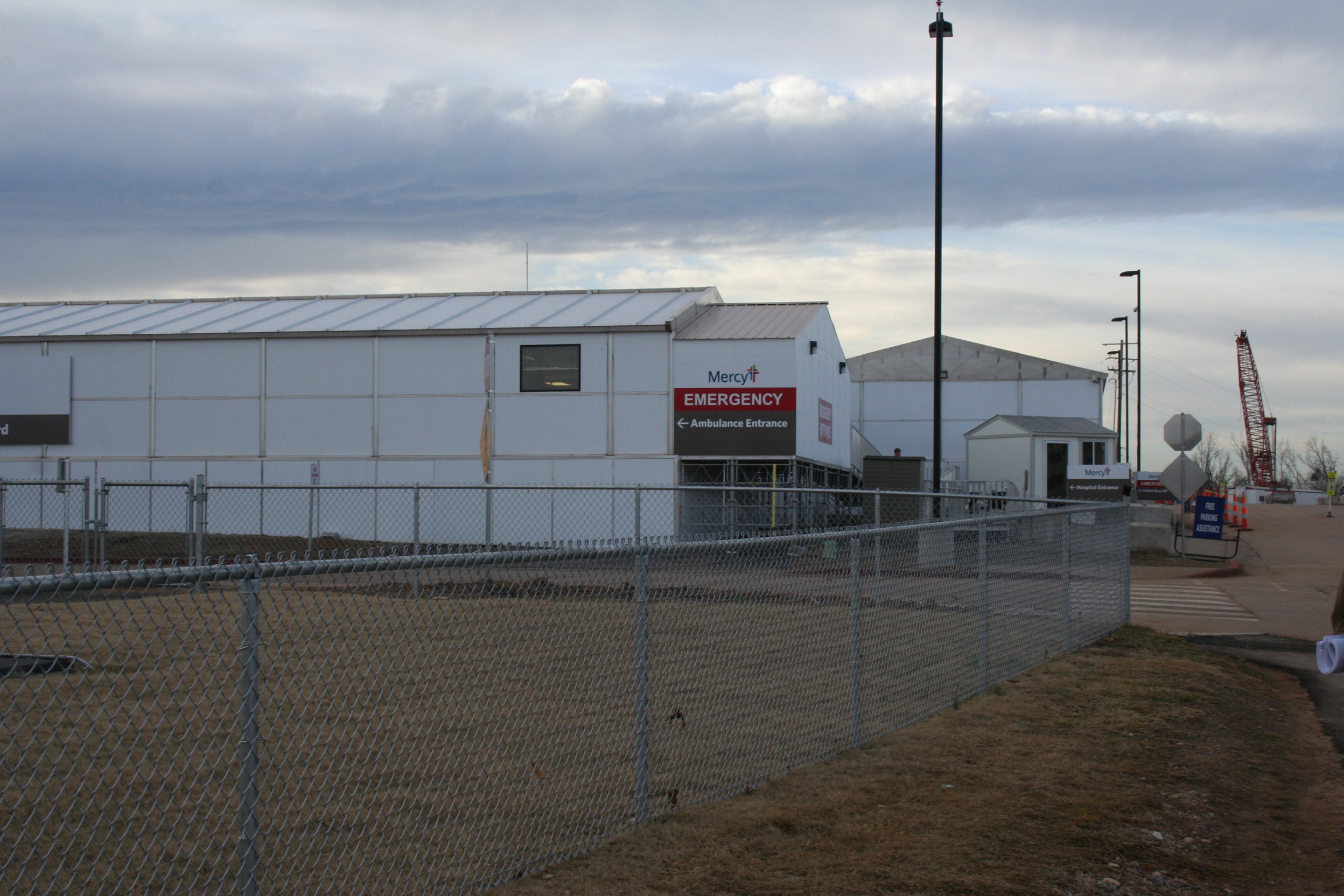
After the introductions and the overview, it was time to get to the actual site, something I’d been itching to do. From the outside the hospital looked like one of the many construction sites I have been to in the past.

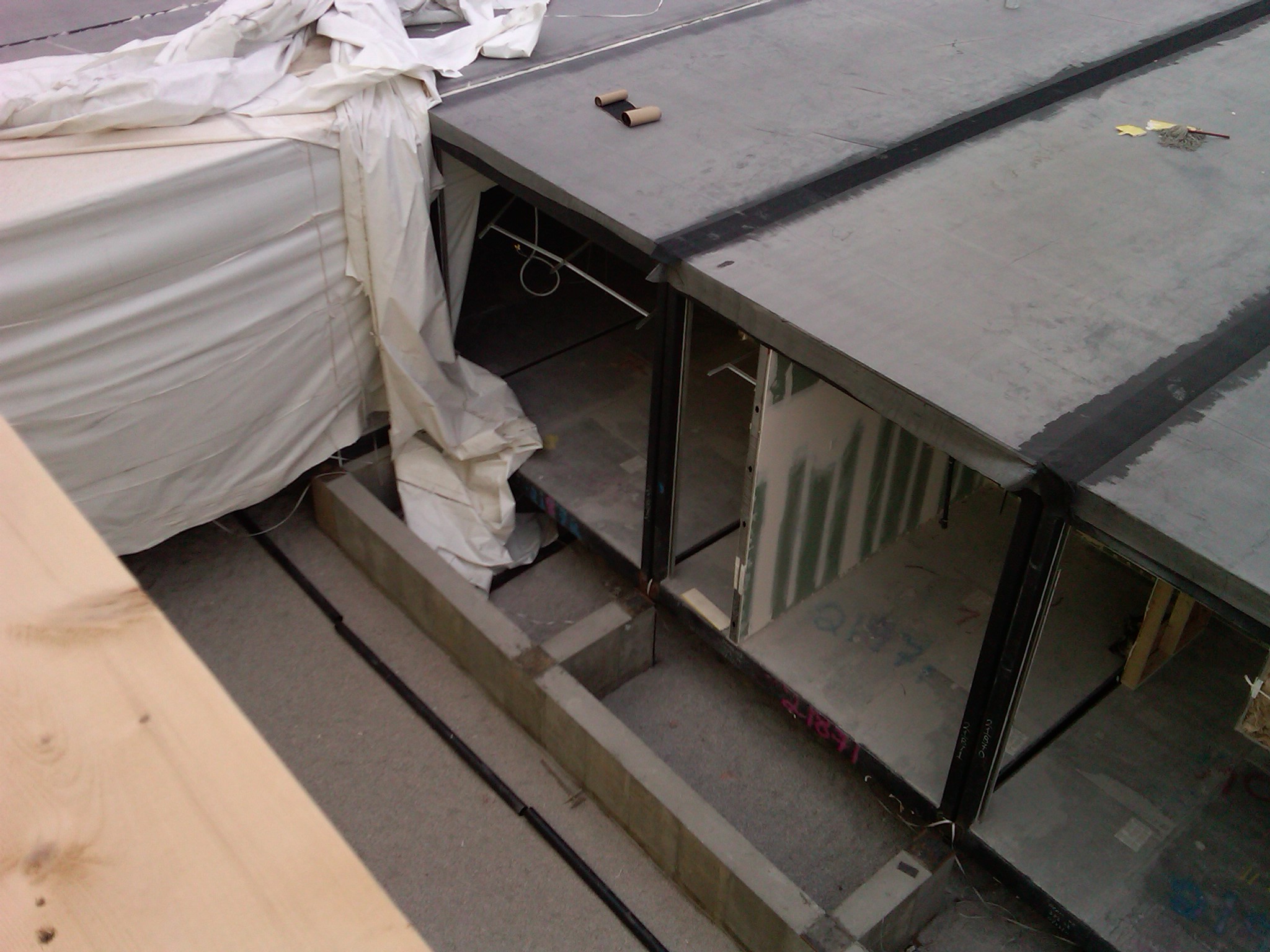
Once David and I entered the structure, the differences stood out.  I could see the unfinished areas where the modules were pieced together like building blocks.  Many of the junctions where plumbing and electrical were connected were between sections.

David explained that a lot of the work was completed before the modules were shipped to the site.  Plumbing systems and tiling finishes were actually installed at the factory.  It was amazing.

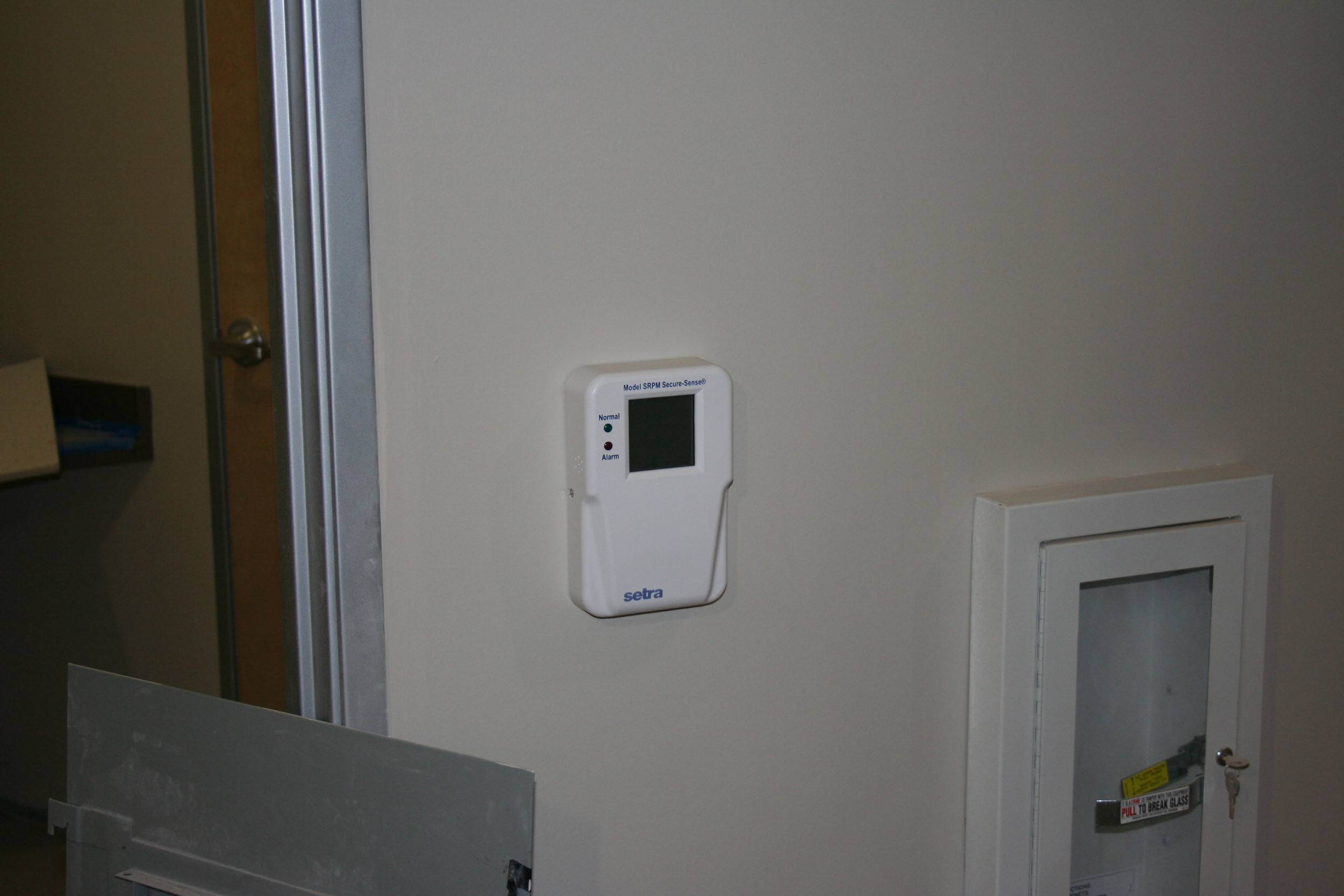
David showed me where Xcel Mechanical installed the ACI temperature/humidity sensors and the Setra room pressure monitors they had purchased from Kele.  David and his team do good work.

To give you a better idea, here are some photos.

Our conversation continued and David brought up our new power-monitoring product endicator. Then we talked about EnOcean and the way energy harvesting worked.  David and Sean seemed very interested.  While it may not have applications for this temporary hospital, it may be a smart addition to the future one.

Driving to the Mercy Hospital job site, we drove where the tornado had been, and it really hit me how devastating this storm must have been.  There was a huge barren swathe through town where homes and buildings were once standing.  You could see new house being built and the town recovering but it really caught me off guard.  Look at Joplin, Missouri, on Google Earth, and you can see where the storm had been.

Winding down my visit, I asked what they were going to do with the temporary hospital once the permanent one was completed?  David told me that they would repurpose the components. They would ship modules to other hospitals that needed them.  Say, a hospital in Florida needed an Operating Room. They would package it up and ship it down.

Talk about recycling!
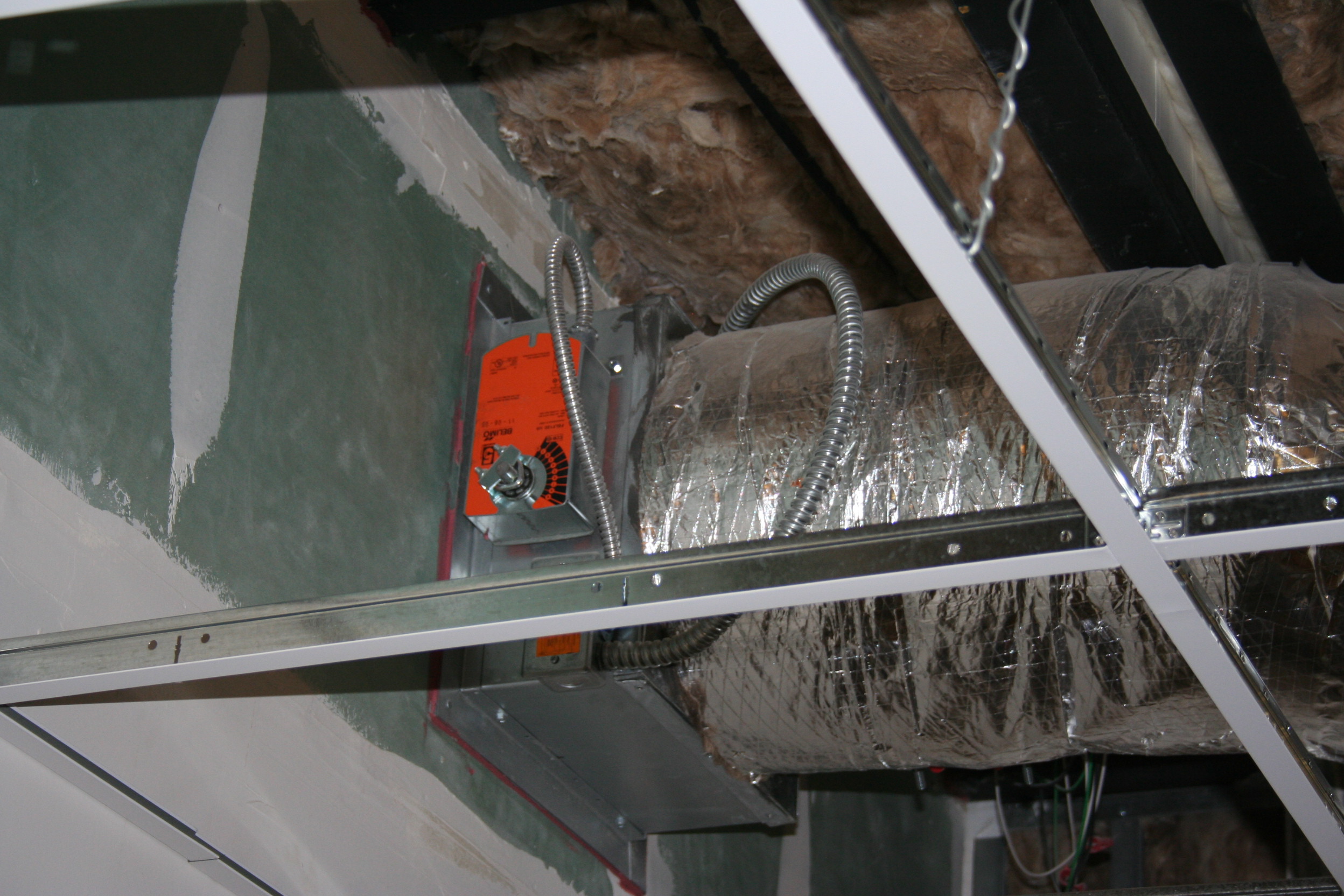
Kele Belimo ActuatorBelimo Actuator

Setra Room PressureSetra Room Pressure

Beginnings of a Modular HospitalBeginnings of a Modular Hospital

Module Being Lifted into PlaceModule Being Lifted into Place

All Modules in PlaceAll Modules in Place

View from the TopView from the Top