Kele Blog

Humidity Sensors in Distress

Let’s start with a riddle:

Q: They’re dirty, they’re annoying, they cause all sorts of trouble, they make everyone uncomfortable, and they’re hard as heck to catch; but, they’re not the pesky flies that buzz around one’s picnic potato salad? What are they?

A: Humidity sensors abused by hostile environments.

You’d be surprised where we find hostile environments. They’re not always in industrial plants and oil fields. At one point, the office in which I sit was a hostile location. On occasion, it still is. Read on.

Condensation

Believe it or not, humidity can be hostile to a humidity sensor. That is, humidity is hostile when the moisture in the air is allowed to condense into liquid water on the surface of the sensor or its electronics.

Any time an object’s surface temperature is below the dew point of the surrounding air, condensation will form on the object. If the object is exactly at the dew point or just a degree or so below it, a fine mist will form all over it. If the object is much colder, say 10°F (5.6°C) or more below the air’s dew point, a fully wet surface and active dripping will be the case. To prove the latter case to yourself, take a frosty cold can of your favorite soda outside on a muggy summer day and observe the puddle wherever you set it down.

So how is this hostile to a humidity sensor? After all, being wet is just the same as 100 percent relative humidity, right? Wrong. When we say 100 percent relative humidity, we mean that the air is holding all of the water vapor it can hold at a given dry-bulb temperature. We use the term saturated air for this condition, and it is a special point at which the air’s dry bulb temperature is equal to its dew point temperature. Humidity sensors handle that just fine. Saturated air does not necessarily mean that the surfaces of things are wet. In fact, is unlikely that a humidity sensor or its electronic parts are wet because they each dissipate a little bit of power; this power warms them, so their temperatures should be a little bit higher than the surrounding air; their surfaces should be above the dew point temperature, so they should stay dry.

When a sensor gets wet, it will typically give a 100 percent humidity output. But it takes a while for it to dry out even after the surface condensation evaporates. Think of a humidity sensor as a tiny sponge. The liquid water that it has soaked up will take time to wick to the surface and evaporate even if drying conditions are good. If drying conditions are poor (high humidity), the time can be very long. Some sensors dry more quickly than others, but they all take time.

When the sensor finally gets dry, it has a new component to it. While water condensed from the air is pretty clean, it’s not perfectly pure. It leaves some residue on the surface from which it evaporated. One bit, or even a dozen, may not affect the accuracy of the sensor. Regularly repeated exposure to liquid will make those tiny bits of residue add up to a coating around the sensor that can seriously shift its calibration.

So what makes them wet, then?

Unusual conditions can cause a humidity sensor and its electronics to be colder than the dew point of the surrounding air, and there are also conditions in which other objects above the sensor get cold and drip condensation down on it. Here is an example, along with the solution that was employed to get proper humidity sensing back on track.

The Sensor is Blowin’ in the Wind…

The most prevalent occurrence of condensation indoors is when the humidity sensor lies within a room’s supply air stream during summer months in humid climates. One example came from a specialty retail store that required pretty good humidity control in its showroom. The store is located in a city with consistently humid outdoor air. Sorry, the names of the store and city are omitted to protect the innocent.

This store had supply air diffusers designed to discharge air across the ceiling at enough velocity that it did not fall until it reached the wall. Thus, anything mounted on the wall at the falling point can be considered to be sort-of in the supply air stream. That’s where this store’s humidity sensor was mounted. Unfortunately, it was also mounted fairly close to the store’s front door. On warm, humid days, the outdoor air would swoosh in when a customer opened the door. Also unfortunate was that the humidity sensor was directly in the path of that swoosh of warm, humid air. So, the sensor would be nice and chilly and then get hit with a blast of air with a dew point much higher than the sensor. This collision of warm humid air with the chilled sensor created instant wetness. Worse, it went on all day long, every day.

Not only did this poor sensor read 100 percent most of the time in the summer, it also was toast after only six weeks in place. When it was opened, it was obvious what had happened. The sensor element and all of the electronics were covered in a fine layer of dust. The contractor relocated the sensor toward the middle of the store, out of the way of any supply air and out of the way of the incoming air from the front door. The sensor then gave proper, accurate readings instead of bouncing up to 100 percent all day. It also lived happily ever after. It’s two years old at the time of this writing.

Corrosives and Other Nasties

The bulk of this article is about condensation because it seems to be the least understood of the humidity sensor enemies. Corrosives and other foreign substances (volatile organic compounds or VOCs) are more obvious destroyers, but some of them have sources that are not so obvious.

Silicones are the most surprising hostile substances for humidity sensors in general. Many instances have been reported in which silicone sealant has been used to caulk around an installed outdoor air humidity sensor’s wiring box or conduit body. A few indoor sensors to our knowledge have been attacked by the use of silicone sealant behind the sensor to insulate it from the wall cavity. One trouble with silicone sealants is that they emit the volatile part of the goop as it cures. The volatile part is typically a hydrocarbon solvent – not good for the innards of a sensor element. These vapors can shift the sensor’s calibration a bit. Repeated exposure can shift the calibration a lot. Another trouble is that uncured silicone sealant itself can spread rapidly over surfaces both by wicking and through air. This substance can shift the calibration of a humidity sensor by 2 percent to as much as 10 percent. If a sensor must be installed with the use of silicone sealant, wait until the silicone cures before installing the sensor. Even better would be to use an alternative like latex caulk.

Corrosives are harder to deal with. Some commonly encountered sources of corrosives include swimming pools, paints, paint strippers, solvents, wood preservatives, aerosol sprays, cleansers and disinfectants, moth repellents, air fresheners, stored fuels, automotive products, hobby supplies, dry-cleaned clothing, and personal care products. All of these things emit volatile organic compounds (VOCs) that are not friendly to humidity sensors and their electronics. As the term corrosives implies, these particular VOCs eat away at the sensing element and uncoated parts of their electronics.

When corrosives attack on a regular basis, the sensor will usually shift calibration slowly until it suddenly dies completely. A corrosion-resistant sensor can weather the attack and prolong the time between replacements. Some (very expensive) sensors are nearly immune to such corrosion and are typically found in industrial or laboratory environments.

Other Stuff can treat humidity sensors badly. For instance, plain old dust is very common. The effect of a routinely dusty environment will be a delayed response time that worsens as the dust gradually coats the sensing element. After totally enclosing the element or filling the elements filter, the output of the sensor’s response time will be so long as to present a steady output to the reading device or controller. One solution for dust is to place the sensor in an aspirated box with a washable or changeable filter.

Notes on Filtering: Some humidity sensors include a gas-permeable filter such as Gore-Tex® that does not allow passage of liquids or solids. That can be a big help in keeping the bad things away from the sensing element. It won’t stop condensation that occurs inside it from humid air, and it won’t stop corrosive gases. It will keep the sensor safe from dust, drips, and rain. The filter might require occasional cleaning, though. Sintered metal filters do a good job with particulate matter and an OK (but not perfect) job with dripping water or rain. They, too, may require occasional cleaning in dusty environments.

So how did my office become hostile to a humidity sensor?  Let’s just say it involved a hot plate, some Indian food (chicken tikka masala), an office neighbor with a sensitive nose, and two cans of Lysol spray.  I’ll leave the rest up to your imagination.  My humidity sensor was a gone…

Conclusion

Ways can almost always be found to mitigate the effects of condensation, corrosives, and other nasties in the air that attack humidity sensors. The tough part is knowing what they are in advance. The easy part is calling Kele Technical Support at 877-826-9045 for assistance in winning your sensor’s battle against these elements.
What Are Power System VARs?

Most people involved in building automation are familiar with kW, which is the rate at which a building is consuming energy from the power company. But there is another power system parameter known as VAR/kVAR which is less well understood. In this article we will attempt to dispel some of the VAR mystery.

The term “VAR” stands for “Volt-Amperes Reactive.” Guess we’re done here, right? What’s that? You were hoping for a little more explanation. OK, let’s dig a little deeper.

First, for any readers that are complete newbies to power monitoring, let’s explain the ‘k’ prefix frequently found on power system readings. “k” simply means “times 1000.” So three kV is three thousand volts, two kW is two thousand watts, one kVAR is one thousand VARs, etc…

What is a VAR?

Let’s begin our VAR discussion by saying that some of the electrical loads in a building (motors, transformers, classic style fluorescent lighting ballasts) use rising and falling magnetic fields to perform their intended functions. We call these “inductive” loads. When an inductive load is drawing power from the power company, some of this power is used to build up the load’s magnetic field during one part of the power cycle. The magnetic field stores part of the energy being delivered to the load.

Here is the interesting part – at a later point in the power cycle, the magnetic field which was built up earlier collapses. When that happens, the energy that was stored in the magnetic field is converted back into power which is returned to the power company! So with inductive loads, extra power is “borrowed” from the power company temporarily but is later “returned” to the power company. The extra power needed by inductive loads essentially bounces back and forth between the power company generator and the loads. This power is called reactive power and given the name VAR (Volt-Amperes Reactive) power.

VAR power does not show up on a conventional kW-only power meter. The kW meter only shows power that is actually consumed by the load. However, many modern electronic power meters such as Kele’s endicator will display both kW and kVAR power being drawn by a load.

Are VARs a problem?

So… if VAR power is not actually consumed by the load, but is returned to the power company, then there is no problem, right? Wrong. The extra VAR power, even though it’s not consumed by the load, causes larger currents to flow through the power company’s generators and power distribution system. So the power company has to install beefier generators and distribution equipment to handle that extra current flowing. Therefore they are not happy when a customer’s load is drawing high VARs.

To discourage customers from presenting high-VAR loads to the power system, the power company will sometimes install a VAR meter on a commercial or industrial building and tack a penalty on to the power bill if the VAR reading goes over a certain limit. This is normally not done for residential customers (good news for your home power bill).

How can I compensate for a high-VAR inductive load?

The good news is that there is a way to compensate for a high-VAR inductive load. There is an electrical component called a “capacitor” which also draws reactive power but stores the energy in an electric field instead of a magnetic field. Now, here’s the cool part – the capacitor stores and releases its reactive energy at the opposite times of an inductive load. That is, just as the inductive load needs extra energy to build up its magnetic field the capacitor is ready to give up the extra energy stored in its electric field, and vice-versa.

So by installing the correct amount of capacitance in parallel with an inductive load, the extra reactive power needed just cycles back and forth between the capacitor and the inductive loads, and the power company does not ever see the reactive power on their system.

Note we said the “correct amount” of capacitance. The value of the capacitance must match the value of the load inductance for complete cancellation of the reactive power seen by the power company. Of course, in the real world they won’t be perfectly matched; but still, the reactive power seen by the power company can be reduced to a low level.

If your building has a relatively constant inductive VAR load, then a fixed bank of capacitors can be installed for “nominal” reactive power cancellation. If your building has inductive loads that are dynamically cycled so that the inductive VARs fluctuate a lot, there are “smart” controllers that can measure the instantaneous inductive VARs and switch different values of capacitance in or out of the system to maintain on-the-fly dynamic cancellation of the inductive VARs.

Conclusion

The inductive VAR load presented by a building to the power company is always undesirable. You may or may not be penalized by the power company for a high-VAR load, depending on your situation. Capacitor banks can be added to a load to cancel the inductive VARs seen by the power company. Capacitor banks can be provided as fixed-value or dynamically-adjusted devices depending on whether your inductive VARs are steady or fluctuate widely. Kele’s endicator power monitor will give your building automation system the information it needs – both kW and kVAR, to control capacitor banks and minimize those utility penalties if they are causing you a pain in the wallet. Call Kele today to find out how!

Power Monitoring – Harness the Power!


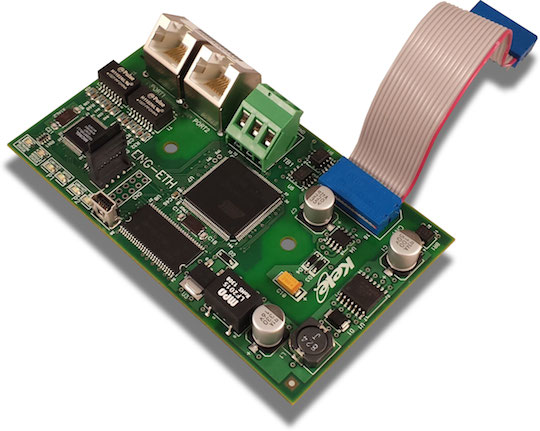
Update!! The ENG-ETH Ethernet Communication Module for endicator is now available. It reads data from the endicator™ main processor, formats the data, and transmits it over Ethernet using BACnet IP, Ethernet IP, and Modbus TCP protocols. The module also hosts a website where meter status can be viewed using any browser that supports Adobe Flash.


For 30 years Kele has been the building automation industry distribution leader, providing parts, solutions, and world class personal customer service. Kele works hard to stay ahead of the curve when it comes to industry changes while always focusing on maintaining the highest level of customer service.  Our power monitoring offering is no exception. Kele has been offering a wide variety of power monitoring brands and products since 1983 and building power monitors since 1993.

Power monitoring is not new to the building automation and energy management industries. Those that have been around building automation and energy management systems can, almost jokingly, say “We were green before green was a thing.” However power monitoring has changed. With the growing focus on saving energy and resource management, power monitoring has been thrust to the forefront of building automation and energy management.  Enter endicator™. Kele’s new power monitor.


Kele’s endicator™ power monitor, introduced earlier this year, is the cutting edge of power monitoring devices. Designed with future upgradability in mind, the endicator™ power monitor gives user the ability to make changes and perform upgrades in the field. Firmware, communication capabilities, and other features can be upgraded according to changes in your customer’s needs. This kind of forward thinking sets endicator™ apart from the others. Think of it as “future proof”.

Here are just a few of the many features of the endicator™ power monitor:

  • NEMA 4 enclosure standard
  • KWH Accuracy class 0.5% ANSI C12.20 For meter alone with unmatched CTs.
  • 0.5% system accuracy with factory calibrated matched CTs.
  • Data port for setup and trend retrieval
  • Measure voltages up to 32,000 VAC (voltages over 600 VAC require the use of a potential transformer, not included)
  • Supports 0.333V safe CTs and 5A CTs (must use optional 5A adapter board)
  • BACnet MSTP, LonWorks, N2 and Modbus RTU available
  • Password protected configuration
  • Powered by separate 24 VAC supply
  • On-board data logging
  • Auto configuration
  • Upgradable firmware through data port
  • Bidirectional power measurement
  • CSI (California Solar Initiative) approved

Kele doesn’t stop there. We also offer power monitoring units from Honeywell, Veris, and WattNode.

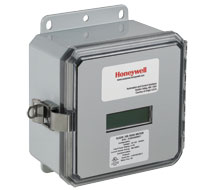
Honeywell H-Series The Honeywell H-Series 500 submeters, available from Kele, feature a direct-read 8-diget LCD display of cumulative kWh. The H-Series 500 also is UL Listed and meets or exceeds ANSI C12 national accuracy standards. Communication options include Modbus RTU or TCP/IP, BACnet IP or MSTP, and LonWorks.
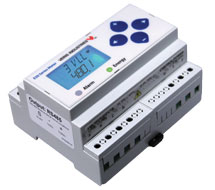
Veris’ E50 Series power meters, also available from Kele, provide a solution for measuring energy data with a single device. The E50 series is conveniently mounted on DIN rail, has password protection capability, and works with popular 0 to .333V or 0 to 1V current transformers. Veris E50
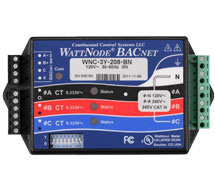
 WattNode The WattNode NC series AC power meters can communicate over 50 values via BACnet and over 27 values via LonWorks. WNC series meters have diagnostic LEDs that provide per-phase indication of power to help with installation and troubleshooting.

These are just a few of the many power monitoring devices that are available from Kele. We also have current transformers, current transducers, voltage potential transformers, and more – all with Kele Inventory, Kele Service, and Kele Technical Support. Check out our complete power monitoring line at Kele – Your Source For power monitoring.

AC to DC – Linear Versus Switch-Mode Power Supplies

For years, Kele has provided dependable, quality 24 VDC power supplies like the DCP-1.5-W, DCPA-1.2, DCP-250, PW2, and the SLS Series. All of these DC power supplies are “linear” power supplies. Another type of DC power supply gaining popularity with building automation and temperature control contractors is called a “switch-mode” power supply (PS6R Series). While both linear and switch-mode power supplies ultimately perform the same task, it is the design technique used to convert AC voltage to DC and the resulting advantages that differentiate the two types.

How they work

To convert AC voltage to 24 VDC, a linear power supply first uses a relatively big, heavy transformer to step down the AC line voltage to a lower voltage around 30 VAC. The transformer also provides electrical isolation by separating the AC line neutral or ground from the power supply’s output. The reduced AC voltage is rectified into a pulsating DC voltage using one (half-wave) or two/four (full-wave) diodes. The pulsating DC voltage is then filtered or smoothed using a large value electrolytic capacitor. Finally, the filtered DC voltage is controlled by a linear regulator to output a constant voltage, even with variations of the input line voltage, the output load, and temperature. The regulator also helps to suppress any output ripple voltage.

Switch-mode power supplies use a different method to convert AC to DC. First, the 60 Hz AC line voltage is rectified and filtered using diodes and capacitors resulting in DC high voltage. Power transistors, typically switching at a preset frequency anywhere from 20 kHz to 500 kHz, convert the high voltage to a higher frequency AC. The high frequency AC is then reduced to a lower voltage using a relatively small, lightweight transformer. Finally, the voltage is converted into the desired DC output voltage by another set of diodes, inductors, and capacitors. Corrections to the output voltage due to load or input changes are achieved by adjusting the pulse width of the high frequency waveform.

Advantages and drawbacks

Size and weight

Linear power supplies operating at 60 Hz require relatively large and heavy transformers. Because switch-mode supplies operate at high frequencies, much smaller transformers are used, making switchers substantially lighter and more compact. For example, a 7.2A output linear supply weighs 14 pounds, mostly due to the large transformer required. However, a 10A output switch-mode supply weighs only 4.4 pounds. The small size and light weight of switch-mode supplies make them well suited for DIN rail mounting in control panels.

Linear supplies that are available with a single voltage input transformer must be ordered for a particular application. Some linears have multi-tap input transformers allowing some application flexibility but they still must be manually tapped for the correct input voltage in the field. Most switch-mode supplies will operate with any voltage from 85 to 264 VAC connected directly to their input, without manual configuration.

Noise

After filtering and regulating, some small amount of undesirable AC voltage will still remain superimposed on the DC output of a power supply. Linear power supplies are quite effective at minimizing noise. A typical specification for noise on the output of a linear power supply is 3 mV peak-to-peak or 0.0125% of a 24 VDC output. Switch-mode power supplies are noisier with a typical maximum specification of 2% of the output voltage or 480 mV on a 24 VDC supply. While some applications like audio equipment or very delicate test equipment may be sensitive to noise on the output of a switch-mode supply, most BAS/HVAC control applications will not be adversely affected.

Efficiency

The efficiency of a power supply is the ratio of its total output power to its total input power. Linear power supplies operate with only 40% to 60% efficiency due to energy lost in the form of heat dissipated through large heat sinks. Switch-mode power supplies are much more efficient, operating around 80% to 90%.

Summary

Linear power supplies have been proven to be reliable but operate somewhat inefficiently. They are relatively noise-free but are generally heavy and bulky because they require large transformers.

In contrast, switch-mode power supplies are small, lightweight, and highly efficient. Although they produce more noise on their output than linear supplies, that is not a factor for most BAS applications.

Whether you need linear or switch-mode, count on Kele to make it easy for you to find the best power supply for your application.

Does Your Building Own its Energy Destiny?

Those of you who have read some of my past blogs have probably gathered by now that I’m fascinated by the intersection of building automation, energy and the coming Internet of Things (IoT) revolution. What captivates me most about this collision of previously tangentially related and/or non-existent industries? The monumental shift of perception I believe we are witnessing of the relationship between buildings and energy.

Historically, buildings have been viewed simply as high intensity energy users and rightfully so. Today, commercial buildings alone account for upwards of 40% of all electricity usage in the US at a cost of roughly $160 billion annually. Building automation arose decades ago to serve the need of not only assuring environmental comfort and safety but also helping lower a building’s energy load and the corresponding energy expenses borne by owners/occupants. There has been amazing progress in building automation and energy efficiency (e.g., better materials, mechanical and electrical systems controls advancements) and grid technology (e.g., smart meters, interval pricing, demand response capabilities) since those first days, but buildings are still simplistically viewed as merely a consumer of energy. Increasingly, however, owners are beginning to rethink their building’s relationship with energy and envision value they can derive from these capital-intensive, physical footprints far beyond a place to simply conduct business that only consumes (no matter how efficiently) energy. People are starting to talk about buildings both as tangible, competitive advantages and sources of new revenue streams and energy is the common denominator.

I read an article today that does an excellent job of highlighting this shift in mindset. The article’s author, Erich Gunther of IEEE (Institute of Electrical and Electronic Engineers), uses the term Smart Buildings 1.0 for the first integration interval of building automation and grid technology where the initial focus has fittingly been on increasing the bottom line via energy efficiency, demand response opportunities and automation technology advancements. The next phase, which he logically calls Smart Buildings 2.0, is, “less about efficiencies and more about corporate energy destinies”. This iteration implies greater control over where, how and when energy is both generated and consumed by a building. Some call this next step in energy control the ability to “island” or go “net-zero”.

So when and why might this ability to control ones “energy destiny” be important? That’s a bit of a rhetorical question, as most folks understand that a business’ productivity level is still very much tied to its access to reliable energy. During major power outage events resulting from natural disaster or grid failure, which have doubled (it’s important to note) over the period 2001-2008 according to Energy Information Administration (IEA), a business’ operations can grind to a halt without a holistic energy strategy/contingency plan while its competitor, located on the other side of the country (or world for that matter) and unaffected by the event, quickly picks up where they left off taking the customer relationship with them.  Control of ones “energy destiny” quickly begins to look like a vital piece of a proactive, forward thinking organization’s Business Continuity Plan.

Under Smart Buildings 2.0, business continuity, viewed through the lens of energy independence, will focus more on renewable, onsite sources of energy generation that allow a building or campus to continue business-as-usual during momentary grid outages and keep mission critical, customer facing functions up and running even in the event an outage that lasts for weeks. Although Gunther only touches on this lightly, I believe the building automation system will be the key enabler of an organization’s ability to ramp up or down power generation and/or consumption and dictate the hierarchy of where onsite generated energy is delivered. I believe that orchestrating both supply (i.e., power generation) and load (i.e., power consumption) side actions will be a critical function of tomorrow’s intelligent building automation/management systems. As buildings become more “energy autonomous” in the future, building automation systems will evolve dramatically to empower this complex level of inter-dependency with the grid and some level of self-sufficiency.

What role(s) do you see building automation systems playing in enabling an organization to own its energy destiny? I’d love to hear your thoughts on this or other energy related news affecting our industry.

Belimo Zip Economizer – Time Saver!

The Belimo Zip Economizer is really a cool product that captured my attention.  If you are or were in the field like I was, I’m sure you’ve struggled just as I did with the “Black Box” style of economizer modules.  They could be difficult to commission at start-up if the OSA (outside air) was not cool enough for economizing.  Also, after installation, troubleshooting the “Black Box” style module was an extremely difficult challenge at best.  There was almost no way to tell what the unit was doing or what mode it was in.  Belimo’s design team must have had input from field techs because they have designed a product that is easy to install and commission.  It is also a breeze to troubleshoot, making it easy to determine if there is a problem and what that problem is.

The “Zip” in Zip Economizer stands for zip code, as in your postal zip code.  No more fumbling with graphs and temperature curves to determine the settings or cross-referencing energy codes.  All you have to do is enter the 5-digit zip code and you are done.  Now THAT is cool!!!  This step will also set up the economizer operation for compliance with all of the following codes and standards.

  • ASHRAE 90.1 – Energy Standard for Buildings Except Low-rise Residential Buildings
  • IECC – International Energy Conservation Code
  • California Title 24 – California building energy efficiency standard
  • NECB – National Energy Code of Canada for Buildings

This cool Econ-Zip Economizer also has an LCD display that shows live status information, alarms and failures, and also operating history.  Check out these features and don’t overlook the 5-year warranty.

Belimo Zip Economizer Features

With the unit’s plug-and-play design, you only have to worry about setting up the features you want.  For example: the module, on it’s own, will work perfectly with just the Econ-Zip-10K temperature sensors installed.  However, if you want the Econ-Zip to control by calculated enthalpy, simply install the Econ-Zip-TH sensors, which measure temperature and humidity. The Econ-Zip recognizes the sensors and self-configures to control by enthalpy.  But wait!  Need a CO2 input?  The Econ-Zip-EM Energy Module provides additional I/Os to offer demand-controlled ventilation.  Any of Kele’s CO2 sensors can be used as long as there’s a 0-10 VDC output.

Belimo has included a manual mode, which can be used during commissioning or troubleshooting.  All components can be tested in the manual mode except for the thermostat.  The manual mode includes an economizer test, used to verity RTU integrated economizer operation.  The ventilation test allows adjustment to the damper minimum position for verification of ventilation rates.  The RTU test is used to test the signals from the thermostat to the RTU.  The DCV test is used for testing the CO2 input and setpoint.

In my opinion, Belimo did their homework, sharpened their pencils, listened to input from the field, and designed a really cool product that “makes it easy” to economize.  If it is as reliable as their valves and actuators, the Econ-Zip is sure to be a hit.  I can only say I wished I’d had this around during my field years.

Visit the Econ-Zip product page to learn more and to purchase. You can also check out this video.  The Econ-Zip as well as the full Belimo line of products can be found at Kele.  And don’t forget Kele’s technical support.  If you have questions on any of our products or questions on applications, please feel free to contact us.


Our Coming Transactive Energy Economy

While scanning through the building automation and energy industry news recently I came across a term I hadn’t heard before. The term, Transactive Energy, piqued my interest and upon reading further I found this article from The Energy Collective website to be excellent in succinctly describing where I believe our electricity market is headed; and the implications its evolution will have on the building automation space. As I’ve touched on in a previous blog, the utility industry’s business model is shifting, albeit slowly, given the level of investment the industry has made in the current infrastructure/model, and this shift will have an increasingly dramatic effect on almost all industries (everybody needs energy, right?). Given the fact that commercial buildings consume upwards of 40% of all energy produced in the U.S., building automation has played and will continue to play a critical role in this massive market transformation.

Transactive Energy is a newly coined term, so new in fact that at the time of this writing Wikipedia didn’t even have an entry for it. To help give you a better idea of what it is, I’ll lean on the definition Christine Hertzog, author of the aforementioned article, gives. “Transactive energy is a software-defined, low-voltage distribution grid that enables market participation by distributed energy resources (DER) bidding generation of negawatts or kilowatts.” I find this coming reality of smart meters, distributed energy generation and automated demand response (ADR) fascinating to think about in general, but especially in the places where it intersects with the building automation industry.

Following Hertzog’s thread, I believe we are headed toward a very different energy market in the coming decades than what we see today. I envision a more democratized and efficient energy ecosystem made up of distributed prosumer (a portmanteau made up of producer and consumer) nodes that allows market forces (i.e., financial incentives) to direct the flow of energy to where it is most valued (i.e., where the highest price will be paid) for either consumption or storage purposes. For example, a commercial or industrial building owner/operator with onsite combined wind and solar power (i.e., kilowatt generation) coupled with energy storage capability in the form of battery banks or fly-wheels and the ability to quickly shed load (i.e., negawatt generation) in the case of a Demand Response (DR) event via its Building Energy Management System (BEMS) with sophisticated, automated demand limiting capabilities will look to maximize the return on investment from their collective energy production/consumption system in conjunction with the value they could create via their core business (e.g., manufacturing) by automatically buying energy, selling energy (either what they produced in real-time or previously produced and stored or bought off the grid and stored) from or to the grid in which is operates or shedding load at any given time based on the given rate/kWh at that point in time.

Where I think this is vitally important when considering the future of our industry is the fact that one of the key enablers of this reality will be the integration of the BEMS with both onsite, distributed generation and the smart grid. Buildings will not only cease being islands unto themselves with respect to energy consumption but will also play an active and critical role in the energy ecosystem as both energy producing and consuming (i.e., prosumers) entities. I believe our building automation systems will quickly evolve to be the brains necessary for a building or network of buildings that manage all aspects of its energy system allowing them to become active participants within the broader energy ecosystem I refer to above.

What are your thoughts on where the utility markets are heading and what implications do you see this having on the building automation industry? Do you foresee an expanded role of the traditional BMS similar to the one I allude to or is this science fiction? Please share your thoughts on this or any other related topic. I’d love to hear your thoughts on what I see as a fascinating future for building automation.

Who’s afraid of the IoT (Internet of Things)?

A few weeks back I blogged about the IoT (Internet of Things) and its historical ties to and implications for the building automation industry. Given factors I discussed there and in another blog where I talked about the democratization of building controls, the intelligence of building automation systems is expected to grow exponentially in the coming years, creating an integrated network of points within buildings and beyond that could help us reach the holy grail of our industry: a building (or network of buildings) that controls and monitors itself without human intervention other than preventive maintenance/repair.

This is totally awesome right? Well, it is an awesome vision and one that I hope we see come to fruition sooner rather than later, but there is a chink in the armor. Ironically, this reality’s Achilles heel is also the very same thing that makes it so powerful: internet connectivity. You see, for building intelligence to reach the point I speak about above, systems will need smarts (and varying degrees of autonomy) down to the device level and the power of these smarts is only realized when the devices are allowed to communicate something about themselves and/or their environment, or better yet, do something beneficial for themselves or others with the information they gather. So why, you might ask, is this a bad thing? Well, device “empowerment” is not bad, but once Pandora’s box is opened….You know the story.

Security (i.e., control) in a world where more “things” are already connected to the internet than humans has long been seen as a significant (if not ultimately self-destructive) problem for the IoT.  In an example that hits very close to home for those of us in the building automation industry, I read today that Google recently learned (rather publicly) that a Tridium based BMS at one of its Australia based offices was breached by a couple of white hat hackers.  Fortunate for Google, these “ethical” hackers simply exposed the issue and didn’t exploit it.  In the hacker’s own words, “We didn’t (override the system to control the building automation system and gain access to any other systems on the same network)…but we could have!” Scary stuff when you think of not only the sensitive data that could be breached, but ways in which our physical world could be altered by someone with malicious intent.

So where does this lead us?  Should we shun the power of device-level embedded intelligence the IoT affords and steer customers away from this technological trend? No, of course not. To do so would surely be futile and to our financial detriment if not demise.  Plus, as much of our industry’s history has been, I see this as a story of curiosity and hope. Curiosity about the possibilities that lie ahead and hope for the benefits our buildings (and ultimately their occupants) will realize. Many in the IoT world say that the IoT’s applications are only limited by humanity’s ingenuity. In other words, they are limitless.

Security is and will remain a major consideration when designing building automation systems under the IoT revolution.  Inherent in the term “connected building” is the fact that these points of connectivity are two-way streets and ones that must be secured just as diligently (if not more so) than existing points where not only can information be breached but “things” can be controlled.  The IoT must help humanity achieve greater security and well-being not hinder it.

Please let us know of security issues you see with the coming IoT and/or hopes you have for the building automation systems of the future under this coming reality.

Spring Return Fail Safe Electric Motors

Consideration must be taken when designing a control system as to what happens when controllers fail or if there is a loss of power. This is referred 
to as fail-safe or spring return. Devices, like valves and dampers, can be made to fail in a position that provides a minimum amount of comfort control or, more importantly, protects expensive mechanical equipment and building integrity.

One example of this is an outside air damper on an air handler. Most outside air dampers are configured to close when there is a power failure. This protects water coils from cold air. Cold air can freeze coils and cause them to burst, leading to expensive repairs and further system down time.

Another example is on a hot water valve. Hot water valves can be set up to fail open to help protect coils from freezing and provides some degree of comfort control. Conversely steam valves are often set up to be fail closed. This is to protect equipment and, more importantly, people.

Achieving a fail position, being open or closed, is usually achieved by one of two methods: mechanical return or electric return.

Mechanical return usually involves a spring. Basically the electric motor works against a spring. When power is removed from the motor the spring contracts and moves the actuator to the fail position. Fail open or fail closed is usually dictated by the mounting orientation of the actuator.

Electric return, or capacitive discharge return, involves an electric storage device that is built into the actuator. The storage device, most likely a capacitor, discharges when power is lost and drives the actuator to the fail position. Usually the direction that electric return actuators fail in is determined by a selector switch.

Battery backup return is very similar to capacitive discharge return. The main difference is that a battery is used to store the electricity needed to power the actuator to the fail position. Due to their size, battery backup units are usually only found on very large valves.

That is pretty much the basics of spring return, fail-safe electric motors. There is a great amount of debate as to which is best. Spring return is proven technology that many still swear by. Electric return lost a good bit of credibility early on because the early units were unreliable but that has changed. Electric spring return units now benefit from improved design and are available in higher torque ratings than their spring return counterparts.

The Democratization of Building Controls

Yesterday I read an interesting article that focused on a cleantech startup’s recent venture capital funding success story. The company, Enlighted, provides smart lighting sensors and software that reduce a building’s power consumption. This concept is nothing novel to the building automation industry, however, according to the article, Enlighted has taken a bit of a different approach in that much of its system’s “smarts” are located in the sensors themselves. Their sensors not only control lighting fixtures much as a traditional lighting control sensor would do, they also monitor light levels, temperature, occupancy and power consumption for the 100 sq. ft. of floor space directly beneath them.

I raise this up as an interesting point in that historically a building automation system’s intelligence has been a monopoly for the central controller (or controllers if the mechanical and electrical systems were controlled independently). With the rise of systems and sensors like Enlighted’s, we may be seeing a major evolution toward decentralized, distributed “smarts” where sensors are tasked with more (and potentially disparate) duties and embedded with sophisticated decision making capabilities themselves. Tomorrow’s sensors may very well be analogous to what we call “controllers” today.

Another exciting trend we may be seeing, as I alluded to above, is a further blurring of the lines between historically separate building controls systems (e.g. HVAC, lighting, fire, security & access). This “systems integration” isn’t exactly new in our industry, but with smart and powerful multitasking sensors like Enlighted’s, integration of a building’s controls systems could be accomplished much cleaner (and hopefully less expensively) where each node (i.e., point) accomplishes what might be required of three separate sensors and their respective controllers today.

We’ll keep an eye on this technology and on the ever evolving nature of the building automation industry to make sure our customers have the best solutions for their clients. Please let us know of trends you see affecting our industry today and in the future and how Kele can better help “make it easy” for you!