Kele Blog

RTD vs Thermistor: What actually belongs in your BAS?

A technician replaces a failed zone sensor on a VAV controller over the weekend — same part number family, same connector, ordered from a different supplier. By Monday morning, the zone is running 8°F off setpoint and the building manager has three complaints in his inbox. The datasheet said equivalent. The control loop disagreed.

The wrong temperature sensor doesn’t fail immediately—it drifts your control out of reality

Temperature sensor failures in BAS systems rarely present as hard faults. Technicians see gradual control deviation instead—zones that won’t stabilize, discharge air that overshoots, or processes that quietly move out of tolerance.

In VAV applications, this shows up as persistent offset from setpoint despite normal actuator behavior. In process environments like food production, the impact is more direct: product quality drift, failed compliance thresholds, or batch inconsistency.

The underlying issue isn’t signal loss—it’s signal distortion. The controller is operating correctly based on the input it receives. The problem is that the input no longer represents actual conditions.

This distinction delays diagnosis. Teams troubleshoot dampers, valves, and PID tuning before questioning the sensor. By the time the sensor is identified, the system has already been operating incorrectly for hours or days.

Cross-brand thermistor substitutions create invisible control errors

Across thousands of field replacements, one pattern shows up consistently: thermistor substitutions fail not because of installation error, but because of curve mismatch.

Two thermistors labeled “10K Type II” or “10K Type III” can match at one temperature and still diverge across the operating range. Controllers interpret resistance based on a predefined curve. When the installed sensor doesn’t match that curve, every reading becomes a calculated error.

What sits underneath this pattern is not just technical—it’s systemic. Sensor selection and substitution are rarely governed at the project or procurement level. There is typically no embedded cross-reference mechanism that validates curve compatibility at the point of sourcing. The decision gets pushed to the field, where it is made under time pressure with incomplete data.

Across multi-brand environments, this shows up most often when:

  • Contractors replace failed sensors with stocked alternatives under time pressure
  • Service teams assume naming conventions imply standardization
  • Integrators inherit systems with undocumented sensor types

Key takeaways

Matching thermistor resistance at a single temperature creates multi-degree error across the operating range, especially in mid-band HVAC control conditions.

Cross-brand “equivalents” fail because curve families—not nominal resistance—define how controllers interpret temperature.

RTD misconfiguration (Pt100 vs Pt1000 or incorrect input type) produces stable, believable offsets that persist undetected.

Probe geometry and insertion depth directly change the sensed air stream, creating control error even when the sensor is electrically correct.

The fastest way to destabilize a control loop is an unverified sensor substitution made under break/fix pressure.

No single manufacturer sees this failure pattern because it only emerges across brands. The result is a system that appears operational but produces incorrect control decisions, making root cause difficult to isolate and extending downtime through misdiagnosis.

Matching resistance at one temperature guarantees nothing across the operating range

The most common field check—verifying resistance at room temperature—is also the least useful for determining compatibility.

Thermistors follow nonlinear resistance curves. Two sensors can intersect at a single temperature and then diverge rapidly as conditions change. In HVAC applications, that divergence often becomes visible between 50°F and 90°F—exactly where comfort control operates.

Field observation
A substituted thermistor reads correctly at startup (~72°F), but as the space cools to 55°F, the controller interprets the resistance incorrectly, producing a 5–8°F offset. The system responds by over-conditioning, chasing a false reading.


This creates a commissioning blind spot. The system appears correct during initial checks and fails only after operating conditions shift, delaying detection and compounding control instability.

RTDs solve stability problems but introduce integration failures when misapplied

RTDs are often introduced to eliminate the variability associated with thermistors. Their resistance-temperature relationship is more linear, and they maintain accuracy under sustained load and environmental stress.

In applications with long runtimes or tighter tolerances—such as manufacturing or critical HVAC zones—RTDs outperform thermistors in stability.

However, the failure pattern doesn’t disappear—it changes.Here, the sensor remains accurate, but the system interpreting it does not. Common failure modes include:

  • Controllers configured for thermistors interpreting RTD signals incorrectly
  • Incorrect input type selection (Pt100 vs Pt1000)
  • Scaling mismatches that produce consistent but incorrect readings

This produces a different kind of failure: stable, repeatable error. The system appears trustworthy, trends look clean, and operators adjust setpoints to compensate—embedding the error deeper into operation.

“10K Type II” is not a standard—it’s a naming shortcut that causes field mistakes

One of the most persistent sources of confusion is the assumption that thermistor naming conventions represent standardization.

“10K Type II” and “10K Type III” are not standards—they’re naming shortcuts. They are shorthand labels that vary across manufacturers, each defining their own curve characteristics within those names.

This creates a false sense of compatibility. A technician sees the same nominal resistance and assumes interchangeability.

In practice, these sensors differ in:

  • Beta values (curve steepness)
  • Resistance behavior across temperature ranges
  • Calibration reference assumptions

The result is predictable: substitutions that appear correct on paper but fail in operation.

Decision trigger
If the application requires consistent control across a temperature range—not just a single point—curve data must be verified. Without it, the substitution introduces an unbounded error into the control loop.


Sensor inaccuracies propagate differently through control loops, trending, and alarms

Not all sensor errors behave the same way once they enter the system.

Thermistor curve mismatches produce nonlinear errors. These distort control loops unevenly, leading to:

  • Oscillation in PID-controlled systems
  • Trends that appear correct at certain temperatures and diverge at others
  • Alarms that trigger inconsistently

RTD-related issues typically produce linear offsets. These affect:

  • Setpoint tracking (consistently above or below target)
  • Energy usage (systems working harder to compensate)
  • Maintenance calibration assumptions

Understanding how error propagates narrows diagnosis. When the error shifts with temperature, the issue is likely curve-related. When it remains fixed, configuration becomes the primary suspect.

Physical fit does not equal measurement equivalence in real installations

Sensor replacement decisions often prioritize physical compatibility—thread size, probe length, connector type.

While necessary, these factors are not sufficient.

Probe design directly affects measurement behavior:

  • Insertion depth determines whether the sensor reads mixed air, discharge air, or boundary layer conditions
  • Thermal mass affects response time and damping
  • Mounting location influences heat transfer characteristics
Field example
A duct sensor with shorter insertion depth reads closer to return air temperature than discharge air, skewing control decisions. The sensor is functioning correctly—it’s measuring the wrong airstream.


This creates misdiagnosis risk. Teams interpret the issue as control instability or tuning error, when the actual problem is measurement location and response mismatch.

Controller configuration—not the sensor—often determines whether the system fails

In many failure investigations, the sensor is replaced multiple times before the actual issue is identified: incorrect controller configuration.

Controllers rely on predefined input types to interpret resistance. When that configuration does not match the installed sensor, the system calculates incorrect temperatures regardless of sensor accuracy.

Most “sensor failures” in the field are actually configuration mismatches.

This is especially common when:

  • Systems are retrofitted with different sensor types
  • Documentation is incomplete or outdated
  • Multiple technicians work on the same system over time

A correctly installed, high-quality sensor will still fail if the controller expects a different curve or input type.

At this point, teams need distribution-level visibility to identify compatibility across brands, controllers, and sensor types—because the failure is no longer at the component level, but at the system interface.

A reliable sensor selection process starts with curve validation, not part numbers

The most reliable selection process begins with one question: what curve does the controller expect?

From there, selection becomes a matter of matching:

  • Thermistor curve tables to controller input definitions
  • RTD type (Pt100, Pt1000) to input configuration
  • Application requirements to sensor characteristics

In practice, when curve data is missing or unclear, technicians default to resistance matching or label equivalence. This is exactly where substitution errors originate.

This is where Kele supports technicians directly—validating cross-brand compatibility and identifying correct replacements based on controller requirements, not just part numbers—reducing the likelihood of curve mismatch entering the system.

The right substitution decision is a tradeoff between downtime risk and control integrity

In real environments, ideal replacement conditions rarely exist. Systems need to be restored quickly, and exact matches are not always available.

This creates a decision point:

  • Restore operation immediately with a potential accuracy risk
  • Delay replacement to ensure correct sensor selection

The right decision depends on the application.

In comfort HVAC, a temporary substitution may be acceptable if behavior is monitored. In process environments, even small deviations can affect product quality or compliance thresholds.

Under break/fix pressure, teams often choose speed over validation. This is where substitution risk becomes operational risk.

Kele supports this decision by helping teams evaluate substitution tradeoffs in context—balancing availability, compatibility, and application sensitivity—and, when needed, structuring temporary vs permanent replacement strategies to avoid long-term control drift.

Practical takeaway

If you cannot verify the sensor curve against the controller input, you are not making a replacement—you are introducing a variable.

Before installing any “equivalent” sensor:

  • Confirm what the controller expects
  • Validate the curve
  • Understand how error will behave across the operating range

Browse our offerings of thermistors and RTDs now on kele.com and find the best solution for your project.

Lower cost and reduce project risk with wireless BACnet

Sponsored content provided by LumenRadio

In building automation, the pressure on controls contractors is constant. Project timelines are shrinking, labor is tight, and buildings—especially older ones—continue to present unexpected obstacles behind every wall. Contractors are asked to modernize systems that were never designed with today’s connectivity needs in mind. And whenever the conversation turns to wireless, there’s often hesitation: Will it really be reliable enough? Can it hold up in the noisy, Wi-Fi packed environments we deal with every day?

LumenRadio’s Wireless BACnet was designed to address these challenges. It gives contractors a way to execute projects faster, more predictably, and with far less disruption—without compromising the performance that building owners expect.

See it in action on your own jobsite

Kele now offers the LumenRadio BACnet* Evaluation Kit—everything you need to power up devices, commission a network, and test rock-solid wireless BACnet performance firsthand. It’s a simple way to validate how wireless can perform in real-world, high-interference environments before deploying it on a full project.

Below are the top benefits that make LumenRadio’s wireless technology a winning tool for today’s controls contractors.

No compromise performance: reliability that matches wired

For many contractors, the biggest mental hurdle with wireless is the concern that it won’t match the reliability of a wired BACnet MSTP network.

What sets LumenRadio apart is that it was engineered specifically for mission critical building automation applications. Its patented Cognitive Coexistence technology constantly senses the radio frequency environment and intelligently avoids interference. Instead of competing with other signals, the network finds the cleanest possible communication paths and continuously adapts as conditions change.

The result is a wireless network that behaves like a wired one: predictable latency, ultra high reliability, and the ability to scale without degrading performance. For contractors, this eliminates the trade-off between flexibility and performance—delivering both without compromise.

Dramatically faster installations—with far less disruption

Every contractor has faced that moment: a VAV box buried behind ductwork, a rooftop unit that would require days of conduit work, or a tenant space that simply can’t be disturbed during operating hours. Running new communication wiring can introduce risk and turn a straightforward job into a logistical and financial puzzle.

Wireless turns that dynamic on its head.

With LumenRadio, contractors can install devices quickly and efficiently without tearing into walls or ceilings. A project that might have taken multiple days with traditional wiring can often be completed in a fraction of the time. There’s no need for after hours access or navigating fire stopping and structural barriers. The installation becomes cleaner, simpler, and far more predictable—qualities every contractor appreciates.

This reduction in labor doesn’t just shorten timelines; it also reduces project risk. And for building owners, less disruption means more willingness to approve upgrades that previously seemed too intrusive.

A streamlined installation is illustrated in a recent project, where a residential building along the Hudson River reduced the time required to connect six rooftop units from a full week of electrician labor to just three hours by integrating wireless modules directly into the units.

In another project, a luxury Texas resort implemented a wireless HVAC retrofit that significantly reduced both labor and guest disruption. Tasks that once took up to two days across 40 units can now be completed instantly from a central system, eliminating ongoing manual work. By avoiding cable installation, the project also reduced installation costs by around 90%, while enabling upgrades to be completed with minimal disruption and no impact on the guest experience.

A new world of retrofit opportunities

Some of the most valuable projects in building automation are retrofits—yet they’re also the projects most often abandoned. The wiring is too old, the ceilings are too tight, the materials contain asbestos, drawings are missing, or the building simply can’t shut down for the work to proceed.

Wireless opens the door to projects that were never feasible before.

Contractors can modernize legacy systems such as pneumatic or LON networks without ripping out existing infrastructure. Rooftop retrofits become straightforward. VAV upgrades become practical even in the most difficult conditions. Connecting heat pumps into BAS is seamless. And because the system doesn’t rely on long cable runs, contractors can deliver solutions that are both cost effective and minimally invasive.

Many contractors say wireless doesn’t just make current projects easier—it allows them to bid on and win projects they previously had to walk away from, creating new revenue opportunities and a competitive edge.

In a project with Conserv Smart Buildings, a building automation specialist in Indianapolis, modernized failing VAV controllers at a three-story office building for their customer. The goal was to restore reliability without forcing a costly, building-wide infrastructure replacement, and wireless BACnet made it possible to upgrade systems incrementally without disrupting daily operations.

Simpler design and predictable commissioning

Wireless in the past often meant unpredictable results. But LumenRadio’s approach brings structure and clarity to the process, making designing and commissioning far easier.

With clear radio planning guidelines, straightforward network creation, and built-in tools for testing and optimizing performance, contractors spend less time troubleshooting and more time completing projects. The network essentially configures itself, selecting the optimal communication paths and adapting to environmental changes on the fly.

This predictability benefits seasoned contractors and those training new team members alike. It reduces callbacks, shortens the commissioning process, and ensures systems perform exactly as intended.

The future of building automation is wireless—and it’s already here

With performance that rivals wired systems, faster installation timelines, and the ability to tackle projects once considered impossible, LumenRadio’s Wireless BACnet is reshaping how contractors approach building automation.

Wireless used to be a compromise. With LumenRadio, it’s an upgrade.

If you’re considering wireless for an upcoming project, a hands-on test is often the fastest way to build confidence. Exploring a live setup can give you a clear picture of how it performs in your specific environment—and help you move forward with certainty. You can get started with the LumenRadio BACnet evaluation kit available from Kele.

We’ve added thousands of new SKUs to support BAS and industrial projects

Find more of the parts you already use—so you can source them all in one place

Kele has added thousands of new SKUs to our catalog, including factory and process automation product lines such as WAGO and United Electric, as well as broader access to restricted BAS brands such as Honeywell, Johnson Controls, and Tridium Vykon.

The goal is simple: you can now source more of your BOM from a single supplier. That means:

  • Fewer POs
  • Fewer invoices
  • Less vendor management
  • More time focused on the job — not sourcing parts

Kele was founded by contractors, for contractors. Expanding our inventory is a continuation of that mindset — helping simplify your supply chain and make sourcing easier for the professionals building and maintaining today’s facilities.


Supporting the way BAS projects are changing

Today’s BAS jobs rarely stop at traditional controls. Contractors are increasingly working in mechanical rooms, central plants, process loops, and custom panel builds, often taking on applications that go beyond traditional BAS controls and into more complex sensing, switching, and process requirements.

To support that reality, we’ve expanded into complementary product categories that contractors are already working with in the field.

That includes:

We’ve also expanded access to restricted BAS product lines, helping contractors source trusted brands they already use on projects, including Honeywell, Johnson Controls (JCI), and Tridium Vykon.

Coming soon:

  • Dwyer Instruments measurement and sensing products for process and facility applications
  • Honeywell Thermal Solutions / Combustion controls

“Our customers’ projects continue to evolve, and we’re evolving with them. BAS contractors today are expanding beyond traditional controls, taking on responsibility for switching, sensing, and even process equipment as buildings become more integrated and intelligent. Expanding our inventory is about making it easier for them to source everything they need in one place. If we can save them time, reduce complexity, and help them finish jobs faster, we’re doing our job.” — Danny Lyons, CEO, Kele Companies


More products. One source.

Kele continues to add new products, brands, and capabilities to help BAS contractors and facility professionals source everything they need from a single trusted partner.

If you’re looking for something specific or need help sourcing a part, our team is ready to help — contact us or connect with your Kele representative anytime.

BAS & Industrial Product Expansion

1,000+ WAGO panel components

1,600+ United Electric pressure & temperature switches


Expanded BAS Product Access

Honeywell

Johnson Controls (JCI)

Tridium Vykon


Coming soon:

Dwyer Instruments Industrial Measuring & Sensing Products

Honeywell Thermal Solutions

Where building automation fits into school facility upgrades

Retrofits, expansions, and smart add-ons for modern campuses

Spring and summer often mark school bidding season, when districts begin planning facility upgrades, renovations, and new construction projects for the upcoming academic year. During this time, facility managers, engineers, and contractors evaluate ways to improve energy efficiency, indoor air quality, comfort, and safety across campus buildings.

For building automation professionals, bid season is a prime opportunity to propose retrofits, system expansions, and smart add-ons that enhance building performance while reducing operating costs.

Many schools still operate with aging infrastructure, partial automation, or standalone systems. Upgrading these environments with modern building automation systems can deliver measurable benefits for both facility staff and students.

Below are some of the most impactful opportunities where automation solutions can be implemented or expanded in school facilities.


HVAC retrofits: A major opportunity for automation

HVAC systems represent one of the largest energy consumers in school buildings. Many campuses still rely on older equipment with minimal automation or legacy control systems.

Retrofitting HVAC equipment with modern building automation can significantly improve both comfort and efficiency.

Common HVAC retrofit opportunities
  • Replacing pneumatic or standalone thermostats with communicating and programmable thermostats
  • Integrating rooftop units into a centralized building automation system
  • Installing CO2 sensors for demand-controlled ventilation
  • Adding scheduling that aligns HVAC operation with school calendars and occupancy
  • Monitoring equipment performance to detect faults early
Benefits of HVAC automation
  • Reduced energy consumption
  • Consistent classroom temperatures
  • Improved air quality
  • Remote monitoring and troubleshooting
  • Reduced maintenance costs

HVAC retrofits are often among the highest-impact automation upgrades a district can implement.


Gymnasiums and auditoriums: high-load spaces

Large spaces such as gymnasiums, auditoriums, and multipurpose rooms place significant demand on HVAC and lighting systems. These areas may sit unused for large portions of the day but require high capacity during events.

Building automation allows systems to respond dynamically to usage.

Smart automation add-ons
  • Occupancy sensors
  • CO2-driven ventilation adjustments
  • Event scheduling integration
  • Automated lighting scenes for assemblies, games, and performances

These systems ensure that large spaces operate efficiently when empty while maintaining comfort during events.


Classroom environment controls

Comfort and indoor air quality directly impact student concentration and learning performance. Automation helps maintain optimal conditions across hundreds of classrooms while reducing the workload for facility staff.

Automation solutions for classrooms

With centralized building automation, facilities teams can manage classrooms across an entire campus from a single dashboard instead of adjusting individual units.


Lighting control retrofits

Lighting upgrades are among the fastest-return investments schools can make. Many districts are replacing outdated fluorescent fixtures with energy-efficient LED lighting systems.

When paired with lighting controls, these systems can dramatically reduce energy use.

Lighting automation opportunities
  • Occupancy sensors for classrooms and offices
  • Scheduled lighting shutdowns after school hours
  • Corridor and hallway dimming during low activity periods

Lighting automation can reduce lighting energy usage by 30–60 percent, making it one of the most attractive projects during school bidding cycles.


Cafeterias and kitchens

School kitchens operate with heavy ventilation loads and equipment that often run longer than necessary. Automation can help optimize these systems without impacting kitchen operations.

Automation upgrades for kitchens
  • Demand-controlled kitchen ventilation
  • Exhaust fan automation
  • Coordination of make-up air systems
  • Temperature and equipment monitoring

These upgrades help reduce energy consumption during off-peak periods while maintaining safe kitchen conditions.


Security and access system integration

Safety remains a top priority for school districts. Many campuses are expanding their security and access control systems to improve protection for students and staff.

Building automation platforms can integrate with:

  • Door access control systems
  • Security alarms
  • Video surveillance systems
  • Emergency lockdown protocols

Centralized integration allows administrators and security personnel to monitor and respond to events quickly across multiple buildings.


Indoor air quality monitoring

Since the COVID-19 pandemic, school districts have placed greater emphasis on healthy indoor environments. Building automation can help monitor and maintain safe air quality levels.

Common IAQ monitoring add-ons

These systems help facility teams maintain healthy learning environments while ensuring proper ventilation performance.


Energy monitoring and utility reporting

Many school districts are now tracking energy consumption more closely to support sustainability initiatives and budget planning.

Automation platforms can provide valuable insight into building performance.

Energy management features

These tools can help schools identify inefficiencies and support applications for energy rebates or sustainability grants.


Portable classrooms and campus expansions

Enrollment growth often forces districts to install portable or modular classrooms. These buildings present new opportunities for automation, particularly with wireless technology.

Automation solutions for portable buildings
  • Wireless thermostats and temperature sensors
  • Cloud-based building management
  • Smart lighting controls
  • Wireless environmental sensors

Wireless automation devices eliminate the need for expensive trenching or additional wiring across campus.


Maintenance and remote monitoring

School facility teams are frequently responsible for multiple buildings with limited staff. Building automation can simplify maintenance and reduce reactive service calls.

Smart maintenance tools
  • Fault detection and diagnostics
  • Automated alarm notifications
  • Remote equipment monitoring
  • Preventative maintenance alerts

With real-time system insights, technicians can identify potential issues before they impact classroom operations.


Final thoughts

School bidding season offers a valuable opportunity to modernize campus infrastructure through building automation. From HVAC retrofits and lighting upgrades to indoor air quality monitoring and energy management, automation technologies can significantly improve the performance of school facilities.

For contractors, integrators, and facility planners, identifying where automation can be applied across a campus helps deliver long-term operational savings, improved comfort, and healthier learning environments.

Many school districts also operate with lean maintenance teams responsible for multiple buildings. Smart building systems with centralized control, alerts, and remote monitoring help staff manage facilities more efficiently and address issues before they impact the learning environment.

Building automation opportunities in school facilities


HVAC

Smart thermostats

Integrate rooftop units into automation system

CO2 sensors for demand-control ventilation

Scheduling HVAC for occupancy

Equipment monitoring to detect faults


Gyms/auditoriums

Occupancy sensors

CO2 sensors for demand-control ventilation

Event scheduling integration

Automated lighting for games & events


Classrooms

Smart thermostats

IAQ sensors

Centralized temp monitoring

Wireless zone control

Occupancy-based HVAC control


Lighting control

Occupancy sensors for classrooms & offices

Scheduled lighting shutdowns for after hours

Corridor & hallway dimming during low activity


Cafeteria & kitchens

Demand-control ventilation

Exhaust fan automation

Temp and equipment monitoring


Security

Door access control systems

Security alarms

Video surveillance systems

Emergency lockdown protocols


IAQ

CO2 sensors to track ventilation

Particle counters for quality monitoring

Humidity monitoring for comfort & mold prevention

System failure alerts


Energy monitoring

Electrical system power monitoring

Utility dashboards

Peak demand monitoring

Load alerts & energy reporting


Portable classrooms

Wireless thermostats and temp sensors

Cloud-based management

Smart lighting

Wireless environmental sensors


Maintenance

Fault detection & diagnosis

Automated alarms

Remote equipment monitoring

Preventative maintenance alerts

2026 HVAC refrigerant update: regulations, replacements & readiness

The U.S. HVAC industry is now operating under materially different refrigerant requirements than it was just a few years ago. What began under the AIM Act as a long-range phase-down has become enforceable federal regulation, reshaping equipment design, installation practices, and service standards.

Lower-GWP and A2L refrigerants are moving into the mainstream, influencing safety protocols, labeling, and system monitoring expectations. For contractors, facility managers, and BAS integrators, the focus has shifted from preparation to practical implementation.

As systems evolve, aligning refrigerant detection, airflow verification, and controls integration with updated standards is part of ensuring compliance and operational readiness.

FAQs:

What refrigerants replace R-410A in 2026?

R-454B and R-32 are the primary replacements for R-410A in residential and light commercial systems under the EPA’s 700 GWP limit.

Are A2L refrigerants flammable?

A2L refrigerants are classified as mildly flammable under ASHRAE Standard 34 due to their low burning velocity.

The refrigerant transition has entered a new phase

We first examined the broader environmental drivers and policy trajectory in our previous analysis of the refrigerant phase-out.

Hydrofluorocarbons (HFCs) have long powered building HVAC systems, but many of these refrigerants have high Global Warming Potentials (GWPs) that contribute to climate change. The American Innovation and Manufacturing (AIM) Act set broad goals to reduce HFC production and usage, but as of **January 1, 2025, the U.S. EPA’s Technology Transitions Rule requires that new residential and light commercial HVAC systems use refrigerants with a GWP of 700 or less (U.S. EPA, Technology Transitions Rule).

This means high-GWP refrigerants like R-410A are no longer permitted in newly manufactured comfort cooling equipment, and manufacturers have redesigned their systems accordingly.


Lower-GWP refrigerants are now mainstream

In response to the new regulations, the HVAC industry is moving toward several compliant refrigerants:

  • R-454B — A2L refrigerant with a GWP around 466, emerging as a primary replacement for R-410A in new systems due to its lower environmental impact and similar performance characteristics (EPA SNAP Program Listings).
  • R-32 — A2L refrigerant with a GWP near 675 that also meets the EPA’s ≤700 threshold and is being adopted in both ducted and ductless heat pump systems (EPA SNAP Program).

Both fall under the A2L (mildly flammable) category, which influences equipment design, labeling, and service practices across the industry.

Safety and performance go hand-in-hand

As the industry transitions to A2L refrigerants, leak detection and environmental monitoring become even more critical. Because A2L refrigerants have different safety profiles than legacy refrigerants, facilities need reliable detection systems integrated with building automation systems (BAS).

Kele provides many options in refrigerant leak detection, designed to detect escaping HFC refrigerant in HVAC systems and BAS environments, with selectable outputs and alarm relays to integrate into a control system for proactive safety management.

These tools are especially helpful as A2L refrigerants become more common, bolstering safety and minimizing environmental release.


What A2L means for technicians and facility managers

Systems designed around A2L refrigerants require updated training and awareness. Mild flammability classifications influence:

  • Field handling and recovery practices
  • Ventilation requirements during service
  • Approved tool sets and protective measures
  • BAS and sensor integration for safety monitoring

Leak detection products like those from Kele help provide continuous monitoring and actionable alarm data so technicians and facility teams can respond quickly and confidently.


Retrofitting existing systems isn’t always an option

Although some facility teams ask whether legacy R-410A systems can be converted to newer refrigerants like R-454B or R-32, the short answer is that most existing systems are not designed for retrofit. Differences in lubricant requirements, safety classifications, and component compatibility generally make replacement the safer and more practical path as equipment ages.


The long view: HVAC refrigerants beyond 2026

The refrigerant transition is no longer theoretical. Equipment specifications, safety practices, and compliance standards have materially changed. Building owners, contractors, and BAS integrators who understand A2L requirements and monitoring best practices will be better positioned to manage risk, ensure code compliance, and maintain long-term system performance.

BAS Behind the Game: Systems Powering Modern Stadiums

Stadium Automation at a Glance

Stadiums sit idle for days—then must perform flawlessly for tens of thousands of people with no warm-up, no delays, and no margin for error.


What makes stadium automation different:

  • Occupancy jumps from 0 to 60,000+ in under two hours
  • No tolerance for lag or manual adjustment
  • Multiple systems must operate simultaneously
  • Failures are immediate, public, and disruptive
  • Success means fans never notice the building


Where automation is tested first

When demand spikes, these spaces feel it immediately:

🚻 Restrooms
Instant ventilation, odor control, humidity management, and reliable hot water—without wasting energy between events.

🍔 Concessions
Kitchens, exhaust, pumps, ice machines, and electrical loads must activate together the moment play stops.

🎙️ Press Boxes & Club Suites
Precision temperature and humidity control, independent of crowd behavior elsewhere in the venue.

🅿️ Parking Garages & Loading Docks
Real-time air quality monitoring triggers ventilation only when exhaust levels rise.

🌱 The Field
Lighting, irrigation, drainage, and subsurface systems coordinate to maintain safe, playable conditions.


What fails without smart BAS

Without responsive automation, stadiums experience:

  • HVAC lag during crowd arrival
  • Energy waste during long downtime
  • Odors and humidity buildup in restrooms
  • Manual sequencing during peak demand
  • Disconnected systems with limited visibility

Smart BAS eliminates these issues by anticipating demand and coordinating systems in real time.


Automation working behind the scenes

Stadium performance depends on infrastructure designed to work together:

  • Sensing: temperature, humidity, pressure, gas, leak detection
  • Control: zone controllers, relays, actuators
  • Power: transformers, panels, control power
  • Integration: a single interface for total visibility


Why stadiums are the ultimate BAS stress test

Stadiums expose what automation is truly capable of:

  • No ramp-up period
  • Massive, instant load changes
  • Strict energy and safety requirements
  • Performance under public scrutiny

If BAS strategies work in stadiums, they scale anywhere.


One interface. Total visibility.

Integrated BAS brings HVAC, lighting, water, power, and life safety into one platform—giving operators real-time insight and proactive control so events run smoothly and systems fade into the background.


From Restrooms to Press Box: The Hidden Automation Behind the Scenes

Why stadium automation is different

  • Occupancy can jump from zero to tens of thousands in under two hours
  • Systems must perform flawlessly without warm-up or manual adjustment
  • Multiple building systems must coordinate simultaneously, not sequentially
  • Failures are immediate, public, and disruptive to the event experience

When tens of thousands of fans arrive within a narrow window, a stadium becomes one of the most demanding buildings in the world to operate. Occupancy spikes instantly. Loads shift continuously. Systems that sit idle for days must perform flawlessly for hours–without hesitation, delay, or visible failure.

Stadiums are a stress test for building automation. Unlike offices or campuses, there is no gradual ramp-up, no margin for manual adjustment, and no tolerance for systems that respond too slowly. If automation isn’t designed to anticipate demand and coordinate systems in real time, the breakdown is immediate—and highly visible.

Fans will remember the score, the big plays, and the halftime show.

But they likely won’t remember the building—and that’s the goal.

That seamless experience is powered by building automation systems working quietly behind the scenes, coordinating HVAC, ventilation, lighting, power, water, and fire and safety systems across the entire stadium. When BAS does its job well, there are no timeouts for building issues—just uninterrupted play and happy fans.

Stadiums: The ultimate stress test for building automation

Stadiums are among the most demanding environments a BAS can serve. Facilities like Levi’s Stadium span roughly 1.8 million square feet, with hundreds of thousands of square feet of enclosed, conditioned space—and occupancy that can jump from zero to more than 68,000 people in less than two hours.

To manage that swing while meeting strict California energy standards, BAS relies on dense networks of sensing and control. Zone- and duct-level temperature sensors provide continuous feedback across concourses, suites, and support spaces. At the zone level, programmable controllers like the KMC BAC-4000 Appstat Series manage airflow and temperature so systems respond dynamically without wasting energy during downtime.

Restrooms: Where demand spikes first and automation is immediately tested

Restrooms are one of the highest-impact spaces in a stadium. When play pauses on the field, restrooms experience extreme spikes in usage, require constant ventilation, and must remain comfortable despite doors opening continuously and humidity levels changing rapidly. At the same time, water systems have to keep pace—toilets must flush reliably, sinks need consistent pressure and temperature, and everything has to work without hesitation when demand peaks.

Without responsive automation, restrooms tend to fail in predictable ways. Ventilation systems are often oversized and left running continuously to prepare for peak demand, wasting energy during long periods of downtime. Or they fall behind during surges, allowing odors, humidity, and discomfort to build quickly.

Automation allows restroom systems to respond immediately to demand while supporting sustainability goals. Temperature and humidity transmitters—such as Greystone Humidity Sensors—help drive ventilation strategies that control odors and moisture during peak periods. Behind the scenes, control power components support valves, sensors, and automation hardware that ensure hot water is available when fans need it, without running systems unnecessarily between events.

Press boxes and club suites: Precision control in high-expectation spaces

Press boxes and premium suites demand tighter environmental control than general seating areas. These spaces are occupied longer, house luxury accessories, and carry higher expectations for comfort and air quality.

BAS enables these areas to operate independently from the rest of the stadium. High-accuracy temperature and humidity sensing feeds zone-level controllers that maintain steady conditions regardless of outdoor weather or crowd behavior elsewhere in the venue. The result is consistent comfort without over-conditioning surrounding spaces.

HVAC at scale: Ramping from empty to sold out without missing a beat

At stadium scale, HVAC automation must handle:

  • Rapid ramp-up before gates open
  • Constant load shifts as crowds move
  • Large duct systems with variable pressure demands
  • Fast scale-down immediately after events end

Few buildings experience occupancy swings like a stadium. HVAC systems must ramp up quickly for event days, then scale back just as efficiently once the crowd leaves.

That flexibility depends on automation. Actuators like Schneider Electric’s MS SmartX Series provide precise, automated control for dampers in HVAC systems, helping to regular airflow and maintain building comfort and energy efficiency. Static and differential pressure transmitters—such as the Belimo 22ADP Series—also help maintain proper airflow through large duct systems as loads change. Using smart BAS products like these enable operators to prepare in advance, rather than reacting after tens of thousands of fans arrive.

Parking garages and loading docks: Safety starts before fans enter

In these spaces, automation must balance:

  • Continuous air quality monitoring
  • Rapid response to exhaust buildup
  • Compliance with safety thresholds
  • Energy efficiency during long idle periods

Before fans ever reach the gates, BAS is already at work in parking garages and loading docks. These areas must be monitored continuously for vehicle exhaust and ventilated only when conditions require it.

Carbon monoxide and nitrogen dioxide gas detectors, including CO and NO₂ sensors, track exhaust from gas and diesel vehicles in real time. Kele offers a wide range of gas and specialty sensors. When levels exceed safe thresholds, BAS automatically enables ventilation systems—and then scales them back once air quality returns to acceptable levels—protecting occupants while minimizing unnecessary energy use.

Equipment and mechanical rooms: The operational backbone of stadium automation

Mechanical rooms are the nerve centers of stadium automation. Panels housing controllers, relays, transformers, and termination points are often installed in tight spaces near occupied areas, making reliability and serviceability critical.

Control transformers like the Functional Devices RIB TR Series provide stable power for controllers, sensors, and relays throughout the building. Well-organized panels allow technicians to wire, terminate, and maintain BAS components efficiently, ensuring all systems—from HVAC to lighting to safety—work together as intended. Kele not only offers panel components, but builds hundreds of complete panels to specs supplied by our customers, ready to install.

The field: Automation that protects playability and safety

The playing surface itself depends on automation to remain safe and playable. Stadium systems manage lighting, irrigation, drainage, and even subsurface ventilation and heating.

Water detection devices, such as Kele’s popular WD-2 Leak Detector, plus multiple other leak detection options, help identify drainage or moisture issues early. Integrated controls coordinate lighting schedules and field ventilation systems that heat, cool, and dry the surface, extending playability in extreme weather and reducing recovery time between events.

Concessions: Coordinating systems for instantaneous demand

During peak demand, concession areas require coordination between:

  • Kitchen and exhaust ventilation
  • Pumps and domestic hot water systems
  • Ice machines, refrigeration, and electrical loads
  • Safety systems managing heat and moisture

Concessions are a coordination challenge unlike almost anywhere else in the stadium. When play stops, demand spikes instantly—and kitchens, ventilation systems, pumps, ice machines, and domestic hot water equipment all need to come online in the right sequence. These systems aren’t just supporting food service; they’re also managing heat, moisture, and safety in some of the most densely occupied spaces in the venue.

Building automation makes that orchestration possible. Relays and control power components—such as Functional Devices Enclosed Relays—automatically enable exhaust fans, grease control systems, pumps, and ice makers as concession zones are activated, removing the need for manual sequencing. By coordinating multiple systems at once, BAS helps keep food moving, equipment protected, and lines flowing during the busiest moments of the event.

Beyond game day: Adapting automation for concerts and special events

Stadiums host far more than games. Concerts and special events introduce a different set of challenges, including pyrotechnics, theatrical smoke effects, and changing occupancy patterns that can place new demands on ventilation and life safety systems.

Building automation allows venues to reconfigure quickly for these events. Smoke control strategies coordinate fans, dampers, and ventilation systems to clear smoke from enclosed spaces efficiently, while fire and smoke damper actuators—such as the Belimo FS Seriesintegrate with BAS and life safety systems to support engineered smoke-control sequences. This coordination helps ensure visibility, air quality, and safety are maintained throughout the event, without disrupting the experience for performers or fans.

Delivering this level of coordination requires more than individual components. Stadium automation systems must be designed, specified, and bid with integration in mind from the start. Decisions made early around sensing density, control strategies, power requirements, and panel design determine whether systems will work together seamlessly once the venue is live.

One interface, total visibility across a complex venue

The real power of BAS lies in integration. Operators shouldn’t have to log in and out of separate systems to manage HVAC, lighting, security, fire safety, and water systems. A unified interface brings all of those systems together, giving facility teams real-time visibility across the entire venue so they can make informed decisions, enable equipment proactively, and maintain comfort and safety without disruption.

This level of coordination doesn’t happen by accident. Kele works closely with customers who design, bid, and build these integrated automation systems—often supplying the bill of materials needed to support competitive bids. Once those projects are awarded, those same components become the backbone of systems that monitor and control much of the facility, from enabling ventilation and pumps to managing water heat exchange and HVAC operation. In many stadium projects, these integrated systems account for up to 90% of the building’s operational infrastructure—all accessible from a single, centralized platform.

Energy, sustainability, and the bigger picture

Stadiums make the stakes of building automation unmistakable. Systems must scale instantly, perform under pressure, and disappear into the background while still meeting energy, sustainability, and regulatory demands. Stadiums must reduce waste during downtime, meet increasingly strict regulatory requirements, and demonstrate measurable improvements year over year—all while delivering a seamless experience on event day. For fans and players alike, comfort, air quality, and safety are simply expected, even as conditions change rapidly and demand spikes without warning.

That balance is exactly what building automation makes possible. By coordinating systems behind the scenes, BAS allows venues to scale up when it matters and scale back when it doesn’t—protecting energy budgets without compromising the experience. And while stadiums represent one of the most demanding use cases, the same BAS strategies apply across hospitals, campuses, arenas, convention centers, and large corporate headquarters. The scale may change, but the objective remains the same: deliver comfort, reliability, and efficiency at all times—so occupants can focus on what they’re there for, without ever noticing the systems making it all work.

Parking Garage Gas Detection: CO and NO2 Sensors, Code Requirements, and Best Practices

Gas detection is a critical component of any parking garage ventilation system, yet it is also one of the most commonly misunderstood. Beyond protecting occupants, properly specified sensors play a direct role in meeting mechanical code requirements and controlling ventilation systems efficiently reducing both safety risks and long-term energy costs.

IMC Code Requirements for CO and NO₂ Detection

Under the International Mechanical Code (IMC) Section 404.1, enclosed parking garages must either operate ventilation systems continuously or use automatic controls based on gas detection. In IMC 2021 and later editions, this automatic control method requires carbon monoxide (CO) detectors used in conjunction with nitrogen dioxide (NO₂) detectors. These devices must be UL 2075 listed and installed in accordance with their listing and manufacturer instructions.

ASHRAE Guidance Supports Code Compliance

Engineers frequently reference ASHRAE guidance alongside the IMC because ASHRAE standards—such as Standard 62.1—provide the engineering framework for ventilation rates, air quality control, and energy efficiency. While the IMC defines minimum code requirements, ASHRAE guidance helps engineers implement demand-controlled ventilation strategies that respond effectively to CO and NO₂ levels under real-world parking garage conditions.

For parking garages specifically, ASHRAE has identified CO and NO₂ as two of the most abundant contaminants and emphasized that controlling their levels is central to safe ventilation design, particularly for systems that vary airflow based on actual gas concentrations. In most applications, both CO and NO₂ sensors provide an effective coverage radius of approximately 50 feet. This distance is driven more by gas behavior and dispersion patterns than by the specific sensor brand or model, making proper placement just as important as product selection.

Different Gases, Different Hazards

One of the most common challenges in parking garage design is distinguishing between similarly named gases. Carbon monoxide (CO) and nitrogen dioxide (NO₂) are the primary gases of concern in garage environments, but they are often confused with other compounds associated with indoor air quality applications.

Carbon dioxide (CO₂), for example, is widely used as an indicator of occupancy and ventilation effectiveness in office buildings, schools, and other occupied spaces. In those environments, CO₂ levels rise as people occupy a space, making it useful for demand-controlled ventilation tied to comfort and air freshness rather than acute toxicity. Similarly, nitric oxide (NO) is typically referenced in specialized industrial, laboratory, or combustion analysis applications, not general parking garage safety.

Parking garages present a different risk profile. CO is produced primarily by gasoline-powered vehicles, while NO₂ is a byproduct of diesel engines. These gases can accumulate rapidly in enclosed or partially enclosed garages and pose direct health hazards if not properly controlled. Understanding these distinctions ensures gas detection strategies align with actual garage conditions and current mechanical code intent.

Commissioning and Code Considerations

Commissioning requirements are becoming more common and can significantly impact project cost and timeline. While the IMC does not define specific gas concentration set points, it does require ventilation systems to respond appropriately when unsafe CO and/or NO₂ levels are detected. Local jurisdictions often add amendments that establish trigger thresholds, which may require calibration gas, test kits, and additional labor during startup. Identifying commissioning and testing requirements early in the design phase helps avoid unexpected costs later in the project.

Sensor Placement and Installation Best Practices

Mounting height was once a point of debate, but current best practices have simplified installation. Today, both CO and NO₂ sensors are commonly mounted at the same height, typically 4 to 6 feet above the floor at breathing level. As NO₂ cools, it settles to levels similar to CO, making dual-gas sensors a practical and cost-effective solution. Using a single device to detect both gases can reduce installation time, wiring complexity, and overall system cost while still meeting IMC requirements.

Choosing the Right Sensor

Larger or more complex parking garages often benefit from controller-based gas detection systems, particularly when multiple zones, staged ventilation, or advanced monitoring and alarming are required. These systems offer flexibility, scalability, and centralized control for demanding applications. Smaller or less complex garages may be well served by standalone sensors that meet UL listing and code requirements while integrating directly with ventilation equipment. Selecting the right solution for the size and complexity of the space supports code compliance, occupant safety, and long-term system performance without adding unnecessary complexity.

Key Takeaways
Safety + Efficiency: Gas detection protects occupants and reduces energy use
IMC 404.1: Allows demand-controlled ventilation using CO and NO₂
IMC 2021+: Requires both CO and NO₂ for automatic controls
UL Listed: Sensors must meet UL 2075 and manufacturer requirements
ASHRAE 62.1: Guides ventilation rates and control strategies
Right Gases: CO and NO₂ matter—CO₂ and NO sensors are recommended elsewhere
Placement: ~50 ft coverage usually 4–6 ft. from ground (breathing level)
Simplified Install: Dual-gas reduce cost and complexity
 

Kele GDS Series

Kele GDS Series

Kele KGD Series
Kele KGD Series
Kele KGC-120 Series
Kele KGC-120 Series
Kele KCO-NO2 Series
Kele KCO-NO2 Series
Kele KCOP Series
Kele KCOP Series

Prepare Your Facility for Winter: Key Systems to Inspect and Maintain

As colder weather approaches, facility managers should take time to ensure their systems are ready for the months ahead. Routine maintenance now can prevent costly downtime later. While every building has unique needs, this seasonal checklist highlights core areas worth reviewing before temperatures begin to drop. Be sure that all electrical inspections and repairs are handled by qualified professionals unless your staff is properly trained.

Heating System Readiness

Your heating system will work hard once winter sets in, so early preparation is key. Most commercial buildings rely on boilers or rooftop units (RTUs), while others may use heat pumps or VAV boxes. Before temperatures drop:

  • Ensure vents and returns are unobstructed to maintain airflow.
  • Clean or replace air filters.
  • Test thermostats and controllers for accurate operation.
  • Test overall system operation for heating and dehumidification equipment, including temperature sensors & transmitters
  • Check glycol-to-water ratios in applicable systems to prevent freezing.

Boilers and Rooftop Units

Boilers and RTUs are critical to building comfort and efficiency. Inspecting these systems early helps prevent mid-season breakdowns. Key maintenance steps include:

  • Check Freezestats (low temperature controls) so you don’t freeze a coil. Kele stocks several along with the spray to test them. Check out the TSA-TF142 Series, and the A/FS-XX Series.
  • Tighten all electrical connections and inspect fan and drive belts.
  • Clean scale and debris from the burner assembly.
  • Check fan motors, bearings, pulleys, and housings for wear; lubricate as needed.
  • Verify proper operation of safety controls and overrides.
  • Measure amp draw on fans and compressors to confirm efficient performance.
  • Inspect heat exchangers for cracks or corrosion.

Electrical Systems

Cold weather increases power demand across facilities, making electrical upkeep essential. To reduce risks and ensure reliability:

  • Test circuit breakers to confirm they’re functioning correctly.
  • Inspect electrical wiring for fraying, corrosion, or other damage.
  • Test electrical outlets, switches, and appliances for safe operation.
  • Document any issues for timely repairs by qualified personnel.

Emergency Power Sources

Backup power systems are vital during outages and winter storms. Regular testing ensures they’re ready when you need them. To maintain dependable emergency power:

  • Perform unloaded generator tests weekly and loaded tests monthly.
  • Complete quarterly maintenance inspections.

Plumbing and Water Systems

Freezing temperatures can lead to major plumbing issues if not addressed in advance. Prevent problems with these steps:

  • Check insulation on pipes, replacing any that are worn or missing.
  • Test faucets, drains, and toilets for proper flow and operation.
  • Drain outdoor faucets and irrigation lines, leaving valves open.
  • Confirm shut-off valves are working correctly.
  • Set thermostats to at least 55°F when buildings are unoccupied.
  • Install leak detection sensors in high-risk areas like mechanical rooms, restrooms, and near HVAC systems. Check out the WD-2PR and the WD-2.

Safety and Lighting

Safety and visibility are especially important during shorter winter days. Before the season begins:

  • Check all interior and exterior lighting for proper function.
  • Replace burnt-out or dim bulbs and clean fixtures as needed.
  • Test exit and emergency lighting for automatic activation.
  • Inspect fire alarms, extinguishers, and sprinkler systems.
  • Ensure doors, windows, and fire exits are unobstructed.
  • Review winter emergency plans with your team.

Complete Your Winter Checklist

Before wrapping up your seasonal maintenance, take a few final steps to protect your facility:

  • Inspect roofs and gutters for damage or debris buildup.
  • Clear exterior walkways and check for trip hazards.
  • Prepare snow and ice removal plans before the first freeze.

A few preventative measures now can prevent costly issues later. For dependable sensors, thermostats, and building automation components, Kele has the solutions to keep your facility operating efficiently all winter long. Visit kele.com to explore products or connect with our team for expert support.


How to Wire a Multi-Tap Transformer

Contributed by Functional Devices

Wiring a multi-tap transformer can seem confusing at first glance, especially when you’re staring at a bundle of color-coded wires. It’s a common question we hear from customers: “Which wires do I connect?” The good news is, once you understand your power system setup—whether it’s a Delta or Wye configuration—and know how to measure voltage, connecting our multi-tap transformers becomes a simple, straightforward process.

This guide explains the basics of Delta and Wye systems, how to identify the correct wires, and how to safely connect them to Functional Devices transformers using just a multimeter and a little know-how.

Before we get started, here’s a very important reminder: Always make sure to properly insulate unused primary tap wires.

Answers at a Glance

Q: What’s the first thing I need to know before wiring a transformer?

A: You need to know your incoming power configuration—either Delta or Wye (Y)—and which wires supply the correct voltage for your transformer tap.

Q: Why are there so many wires on a multi-tap transformer?

A: Multi-tap transformers have multiple voltage tap options, each corresponding to different input voltages. The extra wires allow you to select the correct voltage for your application.

Q: How do I identify which wires supply which voltage?

A: Use a multimeter to measure the voltage between pairs of wires in your system. This will help you match the correct input wires to your transformer taps.

Q: Does it matter which phase connects to which wire on the transformer?

A: No, when connecting two phases, it doesn’t matter which phase goes to which transformer wire.

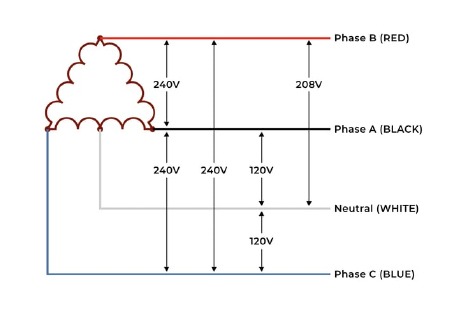
Delta Configuration

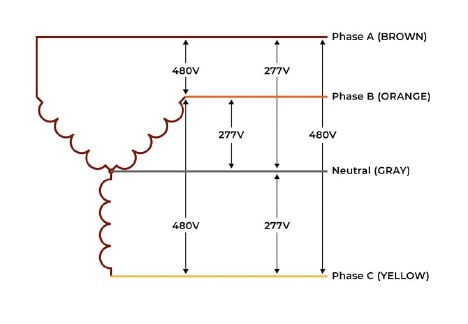
WYE Configuration

An easy way to remember this is that the delta configuration looks like a delta symbol, and the wye configuration looks like the letter “Y”. The wye configuration also looks a bit like a flux capacitor from Back to the Future if that helps. Please note that not every delta or wye set up will have these voltages, these are just two examples. The main point to get from this is that your incoming power typically has three phases and one neutral. This allows each configuration to provide two to three different voltages. Usually, between neutral and a phase is a smaller voltage, and between two different phases is a larger voltage. Knowing which voltage is between which two wires is key when installing one of our multi-tap transformers.

Measuring Wire Voltage

If you don’t know which wire is which, you can always measure it using your multimeter. Once you know which two wires have the voltage for the tap you want, simply connect one power wire to the wire on our transformer with the voltage tap you want, and the other power wire to the wire on our transformer labeled “Comm”. Then separately insulate each of the unused wires. It’s that easy!

For the sake of clarity let’s do some examples. Take a look at the wiring diagram for our TR50VA015:

Let’s say you want to connect the delta configuration to our TR50VA015. If you wanted to connect 120 Vac to the primary, you would connect your neutral (WHITE) to the transformer Comm (Blk). Then you would either connect phase A or C (BLACK or BLUE) to the 120 Vac tap on the transformer (Wht). If you wanted to use 240 Vac on the primary, you would take any two of the three phases and connect them to the orange and black wires on the transformer. It doesn’t matter which phase goes to which wire.

For the wye configuration, you would connect your neutral (GRAY) and any phase to the black and brown wires on the transformer for a 277 Vac primary. Similarly, any two phases on the wye configuration should be connected to the gray and black wires on the transformer for a 480 Vac primary.

Hopefully this clarifies how to wire a Functional Devices transformer. As always, if you’re still confused, feel free to contact us! And check out our offering of Functional Devices Current Transformers.

Current Sensors, Relays, and Transformers in Data Centers

Contributed by Functional Devices


Data centers — the infrastructure of servers, storage systems, and networking equipment powering much of our modern technology — demand an enormous amount of electricity. With the rise of cloud computing, AI, and IoT-enabled devices, demand is increasing yearly; therefore, careful data center power management is essential to ensure better energy efficiency, controlled utility costs, and uninterrupted operations.

Although you might only think of servers at first when you read “data center,” many electrical devices are working behind the scenes to keep those servers running smoothly, including current sensors for measuring electricity, relays for power switching, and transformers for regulating voltages. This post will cover how these three devices help optimize data center power management and improve energy efficiency.

Functional Devices has been manufacturing current sensors, relays, and transformers for over 50 years. We’ve honed our designs into dependable, efficient, easy-to-install components ready to power data centers, building automation systems (BAS), lighting controls, and more.


The Role of Current Sensors in Energy Management

To optimize energy usage in data centers, you must first know how much energy is used at any given point. Current sensors measure electrical currents flowing through circuits, translating them into measurable outputs like voltages or digital signals.
The real-time data a current sensor provides on energy consumption allows a data center manager to optimize power management in the following ways:

• Identify areas of high energy usage
• Make decisions that improve system efficiency and resource allocation
• Detect anomalies and potential problems in the electrical system

Optimizing power management in data centers is impossible without current sensors since no data or baseline informs the process.

Functional Devices’ RIBXGTA-ECM Current Switch has a very low current sensing capability and was specially designed for ECMs (Electronically Commutated Motors), which are associated with a new wave of very efficient HVAC systems, ideal for data center efficiency.


How Relays Enable Seamless Power Switching

Another important way to optimize data center power management is by ensuring a continuous power supply and balanced electrical loads. Nobody wants a spotty connection or slow performance in a data center. The power switching a relay performs means the data center gets the power it needs, in the amounts it needs, and when it needs it (especially if the relays are part of the BAS).

A relay is a sophisticated power switch that turns large currents on and off with only a small amount of electricity. Relays protect sensitive circuits, allow for the control of multiple circuits within a single input, isolate high-power and low-power systems from each other, and switch complex operations with minimal power consumption.

Energy needs proper distribution in a data center to prevent issues, and a relay’s automatic power switching helps do that. Good energy distribution optimizes power management by:

• Preventing overloading circuits, failures, and equipment damage
• Ensuring reliable operations
• Improving fault tolerance and detection
• Maximizing efficiency
• Minimizing downtime

Our RIBTW2421B-BCIP is a BACnet/IP Relay ideal for various applications in data centers, ensuring seamless power switching and maximum efficiency.

Transformers: Ensuring Proper Voltage Regulation

Finally, let’s talk about transformers. These devices regulate and convert voltages, amplifying (“stepping up”) or downgrading (“stepping down”) as needed. They play an essential role in improving efficiency and extending the lifespan of a data center.
Imagine your data center taking energy from the grid but with voltages that are much too high to power the sensitive equipment necessary for successful operations. The voltage regulation provided by a transformer protects while improving energy distribution.

In addition, transformers optimize energy management in data centers in the following ways:

• Maintain stable voltage levels for sensitive and critical equipment
• Minimize energy loss due to voltage fluctuations
• Work with relays to balance loads
• Improve performance and efficiency

Functional Devices’ TIB100A is the first-of-its-kind housed DIN rail-mountable power supply, an ideal choice for data centers to power thermostats, relays, contactors, zone control dampers, electronic locks, card readers, temperature sensors, humidity controllers, and emergency notification devices.


Optimal Data Center Power Management & Energy Efficiency with Functional Devices

Proper energy management is crucial because data centers require a lot of power and run 24/7. Current sensors, relays, and transformers work together to optimize power distribution by creating an efficient, responsive energy system. The real-time data from current sensors and the coordinated switching of relays and transformers optimize energy usage, reduce operating costs, provide better power quality and reliability, and lower carbon emissions.

Integrating high-quality current sensors, relays, and transformers into your data center makes a watt of sense.

If you have questions about anything you’ve reads in this article, drop a comment below or reach out to us; our team of qualified technicians is ready to help. We’ll make sure you get the support you need to keep your systems up and running. Call us today or shop on kele.com for solutions.